Both water-immersed Scanning Acoustic Tomography Equipment and water-fall Scanning Acoustic Tomography Equipment employ NDT (non-contact inspection) method. They utilize water as a coupling medium to transmit ultrasonic waves into the workpiece being inspected. However, they differ significantly in terms of Equipment core principle, structural design, applications, as well as their advantages and disadvantages.
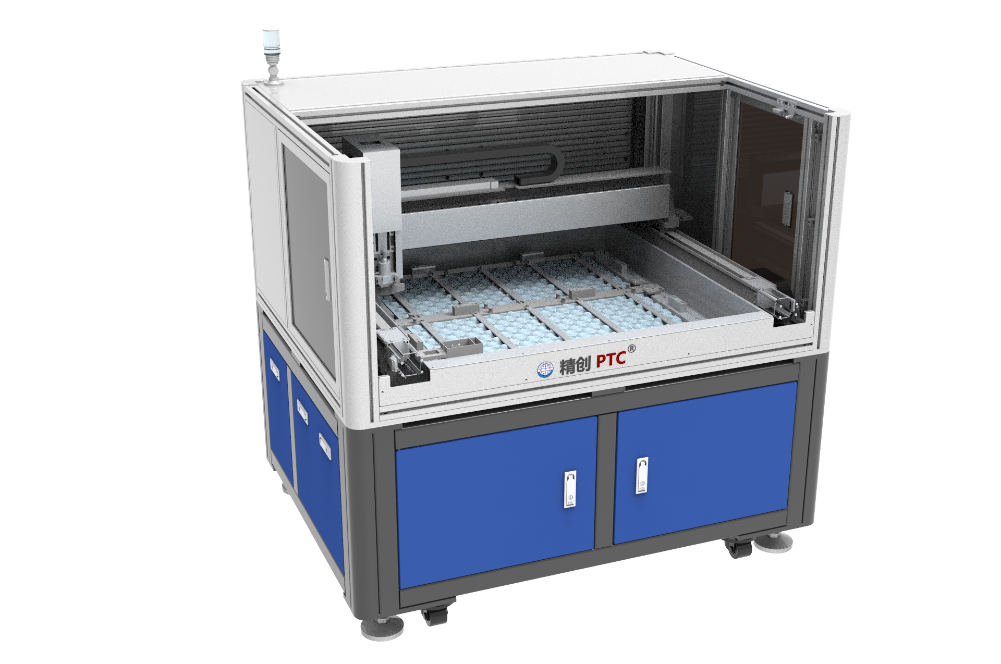
Below is a systematic comparison of the two Scanning Acoustic Tomography Equipment:
Core principle
Coupling method | Water-immersed ultrasonic scanning | Water-fall ultrasonic scanning |
Overall immersion coupling. The workpiece and probe (or one of them) are completely immersed in the water tank. | Local coupling. A stable water column is formed through the nozzle, serving as a coupling bridge between the probe and the workpiece. |
Sound beam path | The sound wave propagates a long distance in water before entering the workpiece. The sound beam diffuses in water. | The sound wave enters the workpiece through a very short or fixed length of water column. The spread of the sound beam is well controlled. |
Scanning motion |
Usually, the workpiece is fixed, and the probe moves precisely along the X, Y, and Z axes. | Typically, a gantry or robotic arm is used to drive the spraying head (with an integrated probe) to scan above the workpiece, which can be fixed or movable. |
Structure and composition
Main parts | Water-immersed ultrasonic scanning | Water-fall ultrasonic scanning |
Large sink (requiring a deionized water treatment system) High-precision 3D scanning frame Immersion probe and fixture Workpiece fixture Water circulation, filtration, and thermostatic system | Spraying head (integrated with ultrasonic probe and nozzle) Gantry or robotic arm scanning mechanism Independent water circulation supply system (water tank, water pump, filter) Water recycling device (optional) Workpiece support platform |
System complexity | Relatively high. It requires the maintenance of large water tanks and water quality, and the system is bulky. | Relatively low. The structure is more compact, eliminating the need for a large immersion tank. |
Flexibility | Relatively low. The size of the workpiece is limited by the size of the water tank, making it troublesome to replace the workpiece size. | Relatively high. In theory, any large workpiece can be scanned, as long as the scanning mechanism covers the area. |
Performance and application
Detection accuracy and resolution | Water-immersed ultrasonic scanning | Water-fall ultrasonic scanning |
Extremely high. With a stable water environment, precise sound path control, and easy-to-achieve focusing (acoustic lens or digital focusing), very high resolution and signal-to-noise ratio can be obtained. | High. Although the water column may introduce slight fluctuations, high accuracy can still be achieved through good design, making it commonly used in high-performance detection. |
Scanning speed | Relatively slow. It is limited by the speed and acceleration of mechanical scanning, and the resistance of water must be considered. | Usually faster. The mechanical structure is more lightweight, allowing for higher acceleration, making it suitable for rapid scanning over a large area. |
Applicable workpiece | Small and medium-sized, complex-shaped, high-value workpieces.
• Aerospace composite components (CFRP)
• Precision turbine blades
• Small complex curved surface parts
• Laboratory samples, reference blocks | Medium and large-sized, plate-like or simply curved workpieces.
• Large composite plates wind turbine blades)
• Online inspection of metal plates, rods, and tubes
• Railway tracks, pressure vessel walls
• Large structures that are difficult to immerse or move |
Surface adaptability | The requirement for the flatness of the workpiece surface is high, and complex surfaces require 3D path planning and constant water distance control. | It has good adaptability to gently curved surfaces and can maintain the stability of the coupled water column through a servo system. However, it faces greater challenges when dealing with complex surfaces with significant height variations. |
Water temperature impact | Sensitive. Changes in water temperature affect sound velocity and probe performance. A constant temperature system are necessary. | Less sensitive. With a small water column and fast heat exchange, the impact is relatively minor. |
Advantages and disadvantage summary
Water-immersed type
| Advantage | Disadvantage |
The coupling is most stable, with excellent signal consistency and repeatability. | The equipment occupies a large area and incurs high infrastructure costs. |
With the highest resolution, it is particularly suitable for micro defect detection | The size of the workpiece is limited by the sink. |
Easy to achieve beam focusing and complex angle detection (such as phased array S-scan) | Maintenance is complex (water quality treatment, rust prevention, cleaning) |
The probe has a long lifespan and operates in a mild working environment | The loading and unloading of materials are inconvenient, and the preparation time for testing is long. |
Suitable for automatic C-scan imaging, with high image quality | It is not suitable for workpieces that are water-sensitive or require cumbersome subsequent processing. |
Water-fall type | It boasts high flexibility and is capable of detecting oversized workpieces
. Its scanning speed is typically faster.
The system is relatively compact. It consumes less water and requires relatively simple maintenance. | The coupling stability is slightly poor, and the water column may be affected by vibration, water flow, and surface conditions. Difficulty in detecting vertical or inclined surfaces. Water splashes may occur, requiring protection and recovery measures |
The probe is integrated into the nozzle, making maintenance and replacement troublesome. Under extremely high precision requirements, the resolution will be lower than that of the water immersed type. |
Selection suggestions
The following core considerations should be taken into account:
• Choose water-immersed type in the cases that:
The primary task is to meet the requirements for detection accuracy, resolution, and image quality (such as research and development, and full inspection of high-value components).
The workpiece is of moderate size and movable.
The inspection tasks are mostly characterized by multiple varieties, small batches, and high complexity.
There is sufficient laboratory space and budget for equipment maintenance.
• Choose water-fall type in the cases that:
The workpiece is too large or too heavy to be submerged or difficult to move.
A high detection throughput and scanning speed are required.
The main objects of inspection are flat plates, panels with large curvature, or long profiles.
The space available is limited.
Above two types of Scanning Acoustic Tomography Equipment are not completely substitutable. Modern high-end systems also feature hybrid designs, such as "partial water immersion tanks" or "water fall coupling", aiming to combine the advantages of both. Meanwhile, whether it is water immersion or water fall type, the equipment focus on increasingly combined advanced imaging technologies such as phased array ultrasonic (PAUT) and total focus method (TFM) to enhance detection capability and efficiency.
 English
 العربية
 Français
 Русский
 Español
 Português
 Deutsch
 italiano
 日本語
日本語 한국어
한국어 Nederlands
 Tiếng Việt
 ไทย
ไทย Polski
 Türkçe
 Bahasa Melayu
 தமிழ்
தமிழ் Filipino
 Bahasa Indonesia
 magyar
 Română
 Čeština
 Српски
 हिन्दी
 فارسی
فارسی Slovenčina
 Slovenščina
 українська
 Suomi
Suomi Հայերեն
 עברית
עברית Latine
 Shqip
Shqip বাংলা
বাংলা Eesti keel
 Oʻzbekcha
 latviešu
 Беларуская мова
 Esperanto


