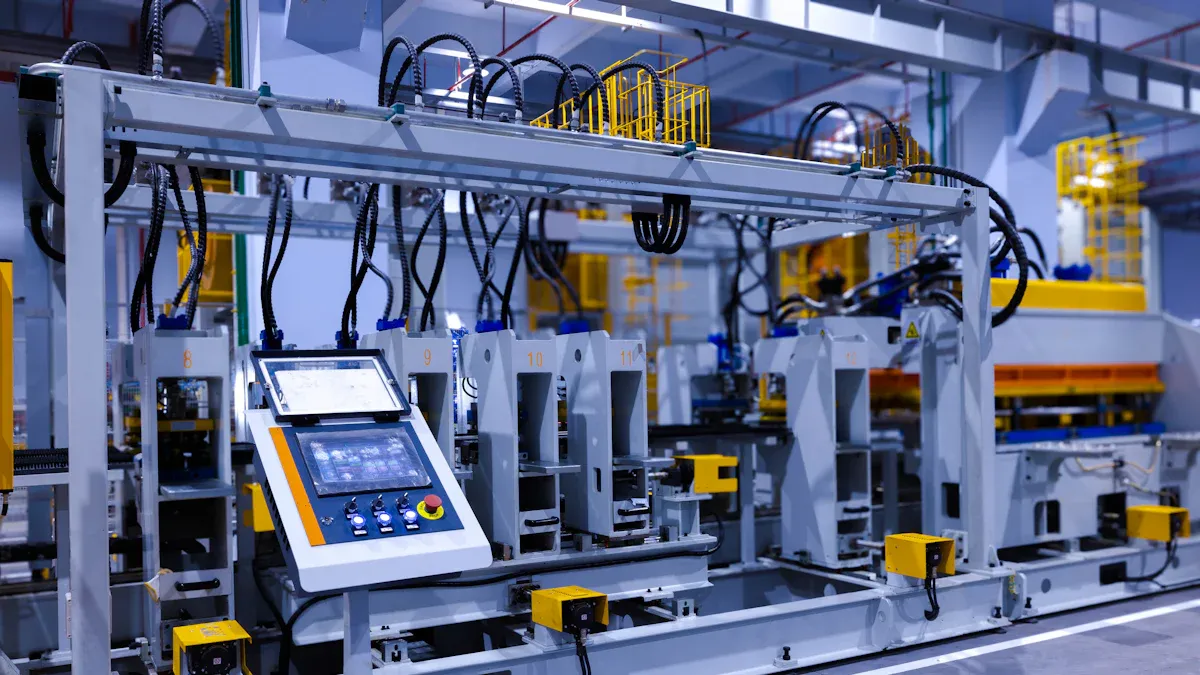
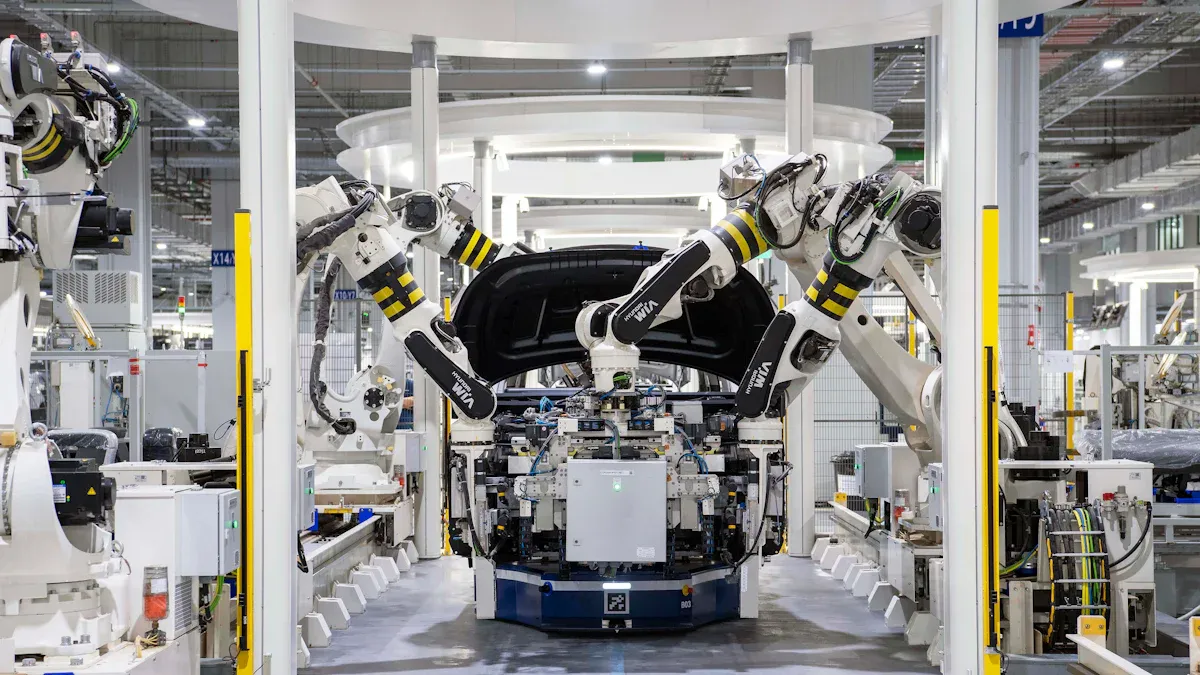
Electronics manufacturing is changing rapidly in 2026, thanks to AI-powered inspection and hybrid inspection systems. Integration with AI and machine learning algorithms now drives smarter quality control. Advanced software algorithms support 3D inspection, reducing false defect identification by 30% and speeding up inspection cycles by 25%. Inspection-as-a-service delivers real-time data analytics, cutting production downtime by 20%. The future of AOI technology brings cloud platforms and human-machine interfaces into smart factories.
Contribution Type | Description |
Smart Factories | Integration of cloud platforms and human-machine interfaces enhances productivity and operational efficiency. |
Deep 3D Inspection | AI-driven inspection tools reduce false defect identification by 30% and speed up inspection cycles by 25%. |
Actionable Data Insights | Real-time data analytics connected to Industry 4.0 networks lead to a 20% reduction in production downtime. |
Key Takeaways
AOI technology uses AI to improve defect detection, making inspections faster and more accurate.
Deep 3D inspection capabilities help identify hidden defects that traditional methods might miss.
Real-time data analytics from AOI systems can reduce production downtime by 20%.
Automated inspections catch defects early, saving time and reducing costs associated with rework.
Integrating AOI with smart factory technologies enhances overall production efficiency.
Investing in AOI systems leads to significant cost savings and improved product quality over time.
Training your workforce on AOI technology is essential for maximizing its benefits.
Choosing scalable AOI solutions allows manufacturers to adapt to changing production needs.
AOI in Electronics Manufacturing
Automated optical inspection systems have become essential in electronics manufacturing. You now see these systems at every stage of the production line, from early assembly to final checks. They use advanced technology to inspect ceramic substrate and other electronic components. This approach helps you catch defects early and maintain high product quality.
Automated Optical Inspection Systems
Automated optical inspection systems perform several important functions in your manufacturing process:
Defect detection: They identify defects using advanced algorithms.
Quality control: They ensure your products meet strict quality standards.
Process improvement: They analyze data to spot trends and help you adjust your process.
Image acquisition: They use single or multiple cameras to capture detailed images.
Image processing: They analyze these images for any anomalies or deviations.
Post-production inspection: They check for defects after soldering, so you can rework faulty boards.
Early defect detection: They catch problems early, reducing the risk of defective products reaching customers.
High-Resolution Cameras
High-resolution cameras play a key role in automated optical inspection systems. You rely on these cameras to capture sharp, detailed images of your electronic components. This clarity allows the system to spot even the smallest defects, such as tiny soldering issues or misplaced parts. When you use high-resolution cameras, you increase the accuracy of your inspections and reduce the chance of missing critical errors.
3D Imaging Capabilities
Modern automated optical inspection systems now include 3D inspection capabilities. With 3D imaging, you can analyze the height and shape of components, not just their surface appearance. This feature helps you detect issues like insufficient solder or lifted leads, which might go unnoticed with only 2D inspection. You gain a deeper understanding of your products and can ensure higher reliability.
Role in Quality Assurance
Automated optical inspection plays a vital role in your quality assurance process. These systems inspect thousands of components per minute, far outpacing manual inspection. You benefit from early detection of defects, which saves materials and time. By catching problems before products leave the factory, you prevent costly recalls and reduce scrap rates. One manufacturer reported a 95% effectiveness rate for their automated optical inspection system, showing how much these systems improve precision and speed.
AOI systems achieve defect detection rates exceeding 95% for visible surface errors, while manual inspection can miss up to 15% of defects—and even more under high workload.
Integration with Smart Factories
You see automated optical inspection systems now integrated with smart factory technologies. These systems connect with AI, machine learning, and cloud computing platforms. This integration allows you to monitor production in real time and make quick adjustments. The high speed AOI market is growing rapidly, with a projected 12.9% CAGR from 2026 to 2033. As you adopt these technologies, you benefit from reduced manufacturing errors, improved scalability, and enhanced product quality. Real-time inspections and data analytics help you minimize waste and adapt to changing production needs.
Inspection Method | Defect Detection Rate | Human Error Rate |
Automated Optical Inspection (AOI) | > 95% | N/A |
Manual Inspection | N/A | 15% (up to 40%) |
Automated optical inspection systems have transformed electronics manufacturing. You now have the tools to deliver higher quality products, reduce costs, and stay competitive in a fast-changing industry.
AOI Advancements
AI and Machine Learning
You see AI and machine learning driving a new era for automated optical inspection in electronics manufacturing. These technologies give inspection systems the ability to learn from previous inspections and adapt to new defect types. You benefit from systems that process real-time data and improve their accuracy with every cycle. Advanced algorithms now allow you to handle a wide variety of complex products and defects, making your inspection process more flexible than ever.
Adaptive Algorithms
Advanced algorithms powered by AI and machine learning transform how you detect defects. You no longer rely on static rules or manual programming. Instead, deep learning models, such as convolutional neural networks, recognize complex patterns and features in images. This approach revolutionizes defect classification and minimizes false positives. You operate systems that learn and improve over time, adapting to new challenges in your production line.
Feature | Description |
Adaptability | The system can handle a variety of complex products and defects. |
Learning Capability | Utilizes deep learning for trainable defect detection, eliminating the need for task-specific programming. |
User Interface | Configured and operated via a simple graphical user interface, accessible to non-experts. |
You experience defect detection accuracy rising to 99.5% or higher, compared to 85–90% with traditional methods. Inspection speed increases dramatically, with AI-driven systems inspecting units in just 0.2 seconds. You also see cost efficiency improve, as these systems handle volume spikes without needing more staff.
Data-Driven Insights
You gain powerful data-driven insights from automated optical inspection systems. Machine learning algorithms analyze inspection data, helping you spot trends and optimize your process. You see defect rates drop by up to 40% and downtime decrease by 30%. These insights allow you to make informed decisions and continuously improve your manufacturing outcomes.
Machine learning algorithms enhance AOI systems by learning from past inspections.
These systems adapt to detect new defects, reducing false positives and improving accuracy.
AI-powered inspection systems learn from previous inspections and adapt to new defects, ensuring high accuracy and minimizing false positives.
Deep 3D Inspection
You rely on 3D AOI systems to inspect various Ceramic Substrate with greater precision. Deep 3D inspection gives you a comprehensive view of both the surface and structure of your substrates. You detect a broader spectrum of defects, such as solder residue, scratch and dent. This technology ensures that connections are secure and minimizes the risk of failures during operation.
Z-Axis Analysis
With 3D AOI systems, you analyze the height and shape of solder joints and components. Z-axis analysis helps you identify issues that traditional 2D systems might miss. You measure the volume and placement of solder, ensuring every connection meets your quality standards. This capability is essential for modern electronics, where reliability matters most.
Complex Power Device Designs
You face increasing complexity in power device designs. Deep 3D inspection allows you to inspect densely packed components. You catch defects that could cause failures in the field, protecting your reputation and reducing costly recalls. In recent evaluations, 3D vision machine vision systems scored 70.4%, outperforming 2D systems at 57.4% and 2.5D systems at 45.0%. You see measurable improvements in defect detection and product reliability.
Actionable Data Insights
You use actionable data insights from automated optical inspection to optimize your manufacturing process. AOI data integrates with yield management software, MES, and ERP systems, creating a closed-loop feedback system. You track key metrics such as production volume, downtime, costs, and overall equipment effectiveness. These insights help you identify bottlenecks, reduce waste, and improve efficiency.
Tip: Integrating AOI data with your process management tools can lead to a reduction in defect rates by as much as 40% over time.
You see direct benefits in product quality and cost savings. You make faster decisions and respond quickly to changes in your production line. Actionable data insights give you the confidence to scale your operations and maintain high standards.
Key Metrics for Process Optimization:
Production Volume: Track the number of units manufactured to benchmark efficiency.
Production Downtime: Monitor both planned and unplanned downtime to maximize uptime.
Production Costs: Analyze all expenses to identify savings opportunities.
Overall Equipment Effectiveness (OEE): Measure productive time to ensure high-quality output.
You now have the tools to transform your electronics manufacturing process. By leveraging AI and machine learning, advanced algorithms, and 3D AOIsystems, you achieve higher accuracy, faster inspections, and smarter process optimization.
Impact on Manufacturing
Speed and Efficiency
You experience a dramatic boost in production efficiency when you use advanced automated optical inspection systems. These systems operate around the clock, inspecting components at high speeds without sacrificing quality control. You no longer depend on manual labor for inspection, which reduces errors and saves costs. Automated inspection systems identify defects early, so you avoid material waste and costly delays. Real-time monitoring lets you make immediate adjustments, keeping your production flow smooth and minimizing downtime.
The following table shows how automated optical inspection systems improve key metrics in electronics manufacturing:
Metric | Improvement |
Production Throughput | 32% increase |
Quality Control Labor Costs | 68% reduction |
Rework Requirements | 41% decrease |
Operational Hours | 24/7 operation |
New Product Introduction Speed | Faster |
You see bottlenecks in quality control disappear as inspection speeds match or exceed your production line. This means you can introduce new products faster and keep your operations running efficiently.
Precision and Accuracy
You rely on automated optical inspection systems for consistent and objective reviews. These systems inspect components much faster than manual processes, which increases your production efficiency. You see fewer errors because the systems use advanced algorithms for defect detection. Early identification of defects leads to lower costs for rework and scrap. You maintain high standards for quality control, and your products meet strict requirements every time.
AOI systems provide objective reviews, reducing variability in inspections.
You increase throughput by inspecting components quickly and accurately.
Early defect detection helps you avoid expensive rework and wasted materials.
You notice that your manufacturing process becomes more reliable. You trust the inspection results, and you can focus on improving other areas of your operation.
Defect Reduction
You benefit from significant defect reduction when you use automated optical inspection systems. These systems detect and categorize many types of defects, helping you identify issues in your manufacturing process. The system logs each defect and can automatically reject faulty items or mark them for further inspection. This reduces the chance of defective products reaching your customers.
AOI systems detect and categorize defects, improving defect detection rates.
The system rejects or flags defective items, enhancing quality control.
Feedback from AOI helps you optimize your process by analyzing defect types and frequencies.
You use the feedback from defect detection to make systemic improvements. Over time, you see fewer defects and higher product reliability. Your customers receive better products, and your reputation for quality control grows stronger.
Tip: Continuous use of automated optical inspection systems leads to ongoing improvements in production efficiency and product quality.
Benefits and ROI
Product Quality
You achieve consistent product quality when you use automated optical inspection (AOI) in your electronics manufacturing process. AOI systems inspect every product with the same standards, which reduces the variability that comes from human inspectors. You rely on advanced sensors and computer vision to catch defects early. This early detection helps you avoid costly rework and scrapping of defective products. AOI gives you real-time inspection data, so you can fix problems before they affect your entire production run. You maintain high quality standards and improve operational integrity. AOI adapts quickly to new product lines or changes in production, so you keep your quality levels high without long delays.
AOI technology helps you deliver reliable products to your customers and strengthens your reputation for quality.
Cost Savings
You see significant cost savings when you invest in AOI systems. Automated defect detection reduces warranty claims by up to 80%. You spend less on labor for manual inspections and rework. AOI improves your production efficiency, so you produce more units in less time. Electronics manufacturing holds the largest share of the optical inspection market, which shows how important AOI is for cost control.
Aspect | Description |
Initial Investment | You pay upfront for AOI systems. |
Cost Savings | You reduce defects, rework, and labor costs. |
Long-term Benefits | You improve product quality and grow your market share. |
You do not just save money right away. AOI represents a commitment to quality and operational excellence. Over time, you see your business grow as you deliver better products and build trust with your customers.
Automated inspection reduces warranty claims.
You improve production efficiency and lower labor costs.
AOI supports long-term growth and market leadership.
Compliance and Traceability
You meet industry standards and regulatory requirements with AOI systems. AOI generates detailed records of every inspection, including images and descriptions of defects. These records help you trace each product through your manufacturing process. You use this data to conduct audits and prove compliance during quality assessments. AOI makes it easy for you to maintain traceability and respond to customer or regulatory inquiries.
AOI systems give you confidence in your compliance and help you avoid penalties or recalls.
If you want to upgrade your inspection process, you can explore AOI solutions from trusted providers like PTC. Visit PTC's website to learn more about advanced AOI technologies that support quality, cost savings, and compliance.
Challenges of AOI Adoption
Implementation Complexity
You face several challenges when you implement automated optical inspection (AOI) systems in your electronics manufacturing process. AOI technology requires careful planning and setup. You must calibrate the system for different component types, which can take time and resources. Regular maintenance, software updates, and hardware repairs add to your operational costs. Sometimes, AOI systems flag non-defective parts as faulty, leading to unnecessary rework and extra inspections. These issues can slow down your production and increase expenses.
Here is a summary of the main challenges you may encounter:
Challenge Type | Description |
False Positives and Negatives | Non-defective parts may be flagged as faulty, leading to unnecessary rework and inspections. |
System Adaptability | AOI systems must recalibrate for different component types, which can be time-consuming and resource-intensive. |
Maintenance and Upkeep Costs | Regular calibrations, software updates, and hardware repairs can impose significant costs on manufacturers. |
Tip: You can reduce implementation complexity by working with experienced AOI providers and planning for regular system updates.
Integration with Other Inspection Methods
You often need to combine AOI with other inspection methods to achieve comprehensive quality control. AOI systems work well with both 2D and 3D inspection technologies. Hybrid AOI systems give you flexibility and efficiency. You can inspect a wide range of defects and component types. Some manufacturers use a combination of AOI and automated X-ray inspection (AXI) to balance cost, speed, and quality. This hybrid strategy helps you catch defects that one method alone might miss.
Note: You can improve integration by choosing AOI systems that support multiple inspection technologies and work seamlessly with your existing equipment.
Workforce Training
You need a skilled workforce to operate and maintain advanced AOI systems. Training programs help your team learn how to use machine vision cameras, analyze inspection results, and communicate in a smart factory environment. You should focus on upskilling workers in programming, troubleshooting, data analysis, and advanced manufacturing techniques. Collaborative training initiatives involving governments, educational institutions, and industry stakeholders support your success.
Amatrol's Vision Inspection Learning Systems teach maintenance communications in a Smart Factory environment.
The system utilizes a machine vision camera to inspect parts and make decisions based on examination results.
It is recommended to use this system alongside Mechatronics carts for enhanced learning.
Effective training programs should focus on upskilling workers to operate and maintain automated systems.
Training should include programming, troubleshooting, data analysis, and advanced manufacturing techniques.
Collaborative training initiatives involving governments, educational institutions, and industry stakeholders are essential for success.
Tip: You can explore training solutions from trusted providers like PTC to help your workforce master AOI technology. Visit PTC's website for more information.
Investment and Scalability
You face important decisions when you consider investing in automated optical inspection (AOI) systems for your electronics manufacturing process. High initial costs often challenge small and medium-sized enterprises. You must plan for expenses related to hardware, software, and integration with your existing production line. These costs can seem overwhelming, especially if you run a smaller operation. However, the demand for high-precision inspection continues to grow as electronics become more complex and customer expectations rise.
You see many manufacturers choosing AOI systems because they want to scale their operations. Advanced AOI solutions use AI and machine learning to improve defect detection and boost production efficiency. You benefit from faster inspections and fewer errors, which helps you produce more units without sacrificing quality. As you expand your business, scalable AOI systems let you add new inspection modules or upgrade software to meet changing needs.
Industry 4.0 and smart factory trends encourage you to invest in AOI technology. You gain real-time quality monitoring and process optimization, which supports your digital transformation strategy. AOI systems connect with your manufacturing execution system (MES) and enterprise resource planning (ERP) platforms. This integration gives you instant feedback and helps you make quick decisions to improve your process.
Tip: You can start with a basic AOI system and upgrade as your business grows. Modular AOI solutions allow you to add features and capacity when you need them.
Consider these factors when you evaluate AOI investment and scalability:
Factor | Impact on AOI Adoption |
Initial Cost | High upfront investment may challenge smaller companies. |
Integration | Complex setup requires careful planning and resources. |
Scalability | Modular systems support business growth and flexibility. |
Technology Trends | AI and smart factory integration drive long-term value. |
You should look for AOI providers who offer flexible solutions and strong support. PTC delivers scalable AOI systems that fit your needs, whether you run a small shop or a large factory. You can visit PTC's website to explore options that match your investment goals and future growth plans.
You make a smart choice when you invest in AOI technology. Scalable systems help you keep up with industry changes, meet customer demands, and stay competitive in the fast-moving electronics market.
Future of AOI Technology
Market Growth Trends
You see the future of AOI technology shaping the electronics manufacturing industry with rapid growth. Manufacturers now face more complex power devices, especially in the automotive sector. Manual inspection cannot keep up with these challenges. Automated optical inspection systems meet this demand and drive expansion across multiple segments.
The market for 3D AOI systems continues to grow. You notice a strong push for co-planarity verification and paste-height analytics. The assembly phase also shows significant growth, as manufacturers seek faster and more reliable inspection solutions.
Segment | Projected CAGR | Notes |
3D Segment | 23.9% | Maximum revenue in 2020, significant growth expected. |
Assembly Phase | 25.0% | Significant growth during the forecast period. |
3D Systems | 13.86% | Driven by demand for advanced analytics. |
Automotive Segment | High CAGR | Complexity of power device necessitates automated inspection. |
You see these trends reflected in your own operations. As you adopt advanced AOI systems, you keep pace with industry changes and meet customer expectations. The future of AOI technology promises even greater market expansion as manufacturers invest in smarter, faster, and more accurate inspection solutions.
Emerging Innovations
You discover new innovations that will define the future of AOI technology. Quantum dot cameras now offer ultra-high sensitivity. These sensors detect tiny changes in color, texture, and reflectivity. You can spot defects that older systems might miss.
Digital twin integration creates a virtual copy of your power device. You simulate and analyze possible defects before production begins. This approach helps you prevent problems and improve product quality.
Edge AI lets you process inspection data right on the production floor. You make faster decisions and reduce delays. Multi-spectral imaging captures data across different wavelengths. You identify defects that are invisible to the human eye, such as chemical residues.
Innovation | Description |
Quantum dot cameras | Ultra-high sensitivity for detecting minute variations in color, texture, and reflectivity. |
Digital twin integration | Virtual replica of power device for simulation and defect analysis before production. |
Edge AI | Local data processing for faster decision-making on the production floor. |
Multi-spectral imaging | Captures data across various wavelengths to identify hidden defects like chemical residues. |
You see these emerging technologies making your inspection process smarter and more reliable. The future of AOI technology will bring even more advanced tools to your factory.
Predictive Maintenance
You use predictive maintenance to keep your AOI systems running smoothly. Automated optical inspection now works with predictive analytics to spot equipment issues early. You prevent downtime and maintain consistent product quality.
Predictive maintenance detects equipment problems before they cause failures.
You avoid unexpected downtime and keep your production line moving.
AOI systems identify patterns of defects that show tool wear or process drift.
You schedule maintenance proactively, reducing costs and improving reliability.
You see predictive maintenance as a key part of the future of AOI technology. This approach helps you maintain high standards and avoid costly interruptions. As you plan for future trends in AOI, you should consider integrating predictive maintenance with your inspection systems.
If you want to stay ahead in electronics manufacturing, you should explore AOI solutions that support these innovations. PTC offers advanced AOI systems and predictive maintenance tools. You can visit PTC's website to learn more about how these technologies can help you prepare for the future of AOI.
Recommendations for Manufacturers
You want to make smart decisions when you consider adopting automated optical inspection (AOI) technology. Industry experts suggest several strategies that help you get the most value from your investment. You should focus on these key areas:
Integrate advanced technologies: You can boost AOI performance by combining it with artificial intelligence (AI) and the Internet of Things (IoT). These tools help your inspection systems learn from data and connect with other machines in your factory. You get faster defect detection and smarter process control.
Choose cost-effective solutions: You should look for AOI systems that reduce human error and waste. Cost-effective quality control helps you save money and improve product reliability. You can compare different AOI options to find the best fit for your budget and production needs.
Understand market dynamics: You need to study your region's electronics market before you invest in AOI. Some areas have different regulations, customer expectations, or supply chain challenges. You can adapt your AOI strategy to match local requirements and stay competitive.
Tip: Start with a pilot project before you scale up AOI across your entire production line. This approach helps you test the technology, train your team, and measure results.
You should also focus on workforce training. Your employees need to learn how to operate and maintain AOI systems. You can set up training programs that teach machine vision, data analysis, and troubleshooting. Well-trained staff help you get the most out of your AOI investment.
Recommendation | Benefit |
Integrate AI and IoT | Smarter, faster inspections |
Cost-effective solutions | Lower error rates and less waste |
Market adaptation | Better compliance and competitiveness |
Workforce training | Higher system reliability |
You may want to explore AOI solutions from trusted brands. PTC offers advanced AOI systems that support AI integration, cost savings, and scalability. You can visit PTC's website to learn more about products that fit your manufacturing goals.
You can stay ahead in electronics manufacturing by following these recommendations. AOI technology helps you deliver better products, reduce costs, and grow your business.
You see AOI technology changing electronics manufacturing in 2026. AI and machine learning help you find defects early and improve inspection speed. Advanced algorithms process images quickly and catch errors that manual checks might miss. AOI systems boost your production efficiency and lower costs by reducing waste. You ensure product reliability and quality with early defect detection. To stay competitive, you should review your current process and consider advanced AOI solutions like those from PTC at ptc-stress.com.
AI integration enables complex inspections.
Fast algorithms improve accuracy.
Early defect detection lowers costs.
Automation increases efficiency.
AOI supports reliable, high-quality products.
FAQ
What is AOI technology in electronics manufacturing?
AOI stands for Automated Optical Inspection. You use AOI systems to check electronic components for defects. These systems use cameras and software to spot errors quickly and accurately.
How does AI improve AOI systems?
AI helps AOI systems learn from inspection data. You get smarter defect detection and fewer false positives. Machine learning lets your system adapt to new products and defect types over time.
Why should you choose 3D AOI over 2D AOI?
3D AOI gives you a deeper view of components. You can measure height and shape, not just surface features. This helps you find hidden defects and improve product reliability.
Can AOI systems reduce your production costs?
Yes! AOI systems catch defects early, so you spend less on rework and scrap. You also save on labor costs because automated inspection works faster than manual checks.
What challenges might you face when adopting AOI?
You may need to train your team and adjust your production line. Initial setup can take time. Regular maintenance and software updates keep your AOI system running smoothly.
How do you integrate AOI with other inspection methods?
You can combine AOI with X-ray or manual inspection for better results. Hybrid systems let you inspect more defect types and improve overall quality control.
Where can you find reliable AOI solutions?
You can explore AOI systems from trusted brands like PTC. Visit PTC's website to learn about advanced AOI products that support quality and efficiency.
Does AOI help with compliance and traceability?
AOI systems record inspection data for every product. You use these records to prove compliance and trace defects. This helps you meet industry standards and respond to audits.
 English
 العربية
 Français
 Русский
 Español
 Português
 Deutsch
 italiano
 日本語
日本語 한국어
한국어 Nederlands
 Tiếng Việt
 ไทย
ไทย Polski
 Türkçe
 Bahasa Melayu
 தமிழ்
தமிழ் Filipino
 Bahasa Indonesia
 magyar
 Română
 Čeština
 Српски
 हिन्दी
 فارسی
فارسی Slovenčina
 Slovenščina
 українська
 Suomi
Suomi Հայերեն
 עברית
עברית Latine
 Shqip
Shqip বাংলা
বাংলা Eesti keel
 Oʻzbekcha
 latviešu
 Беларуская мова
 Esperanto