In today's fast-evolving industrial landscape, ensuring the safety, quality, and integrity of materials is of paramount importance. One of the most effective tools for achieving this is Scanning Acoustic Tomography (SAT). SAT is a powerful non-destructive testing (NDT) method that allows engineers to inspect the internal structures of materials without causing any damage. This makes it a crucial technology for industries where material integrity is critical, such as aerospace, automotive, and electronics.
In this article, we will explore what Scanning Acoustic Tomography is, how it works, its core applications, and why it is becoming a preferred solution for many industries. We will also delve into the advantages of SAT, its comparison with other testing methods, and answer frequently asked questions.
What is Scanning Acoustic Tomography?
Scanning Acoustic Tomography is a non-destructive testing method used to detect internal structural defects within materials. It works by sending high-frequency sound waves through the material. These sound waves interact with the material, and the resulting reflections are captured to form a detailed image of the internal structure.
The key to Scanning Acoustic Tomography lies in its ability to map out the internal geometry of a material with high precision. By analyzing the way sound waves are reflected or refracted inside the material, SAT can identify imperfections such as cracks, voids, and delamination, even in complex geometries .
How Does Scanning Acoustic Tomography Work?
Scanning Acoustic Tomography works by using acoustic waves—essentially sound waves that travel through a medium. These waves are generated by a probe, known as a transducer, which is in direct contact with the material being tested. The sound waves then travel through the material and bounce back when they encounter boundaries, voids, or cracks. The reflected waves are then captured by the transducer and analyzed to generate a detailed image of the internal structure.
The process is highly automated, and the data collected is processed using advanced imaging algorithms. This allows for the creation of precise tomographic images that provide critical information about the internal integrity of the material. The images generated can be used to detect defects that might not be visible on the surface.
Key Components of SAT
Transducer: The device that generates and receives sound waves. It is responsible for the initial contact with the material being tested.
Acoustic Waves: High-frequency sound waves that pass through the material and reflect back when encountering structural changes.
Imaging Software: Specialized software that processes the acoustic signals and generates tomographic images.
These components work together to provide a comprehensive view of the internal structure, identifying potential issues that could affect the material's performance.
Core Applications of Scanning Acoustic Tomography
Scanning Acoustic Tomography is widely used across various industries for the inspection of materials and components. Below are some of the key applications of SAT.
1. Internal Structural Inspection
One of the primary uses of SAT is internal structural inspection. It helps in identifying flaws such as internal cracks, voids, and delamination that could compromise the structural integrity of the material. This is particularly important in industries where the safety of the product is critical, such as aerospace and automotive.
2. Material Analysis
SAT is highly effective in material analysis, particularly for materials with complex structures. For example, it is used to assess the homogeneity of composite materials or to check for variations in thickness, density, or bonding strength between different layers. By detecting such variations, SAT ensures that the material will perform as expected under stress.
3. Quality Control in Manufacturing
In manufacturing environments, SAT plays a vital role in quality control. It allows manufacturers to inspect each component thoroughly before it is used in production. For example, in the electronics industry, SAT can be used to inspect ceramic boards for internal defects like delamination or air pockets, which could lead to failure during operation.
Advantages of Scanning Acoustic Tomography
Scanning Acoustic Tomography offers several advantages over other traditional inspection methods. Below are some of the key benefits:
1. Non-Destructive Nature
One of the major benefits of SAT is that it is completely non-destructive. Unlike methods such as mechanical cutting, SAT does not damage the material being tested. This is crucial for high-value components, as it allows for repeated testing without compromising the part’s integrity.
2. High Accuracy and Resolution
SAT provides highly accurate and detailed images of the internal structure. The resolution of these images is much higher than that of traditional visual inspections, making it possible to detect even the smallest defects. SAT is capable of identifying defects as small as 0.1 mm in size.
3. Ability to Inspect Complex Geometries
One of the standout features of SAT is its ability to inspect complex geometries. Many other testing methods struggle with materials that have intricate shapes or are layered. SAT, however, can easily handle materials with complex forms, making it a versatile solution for a wide range of applications.
4. Faster Results
SAT is known for its quick testing capabilities. The inspection process can be completed relatively quickly, which helps speed up production and quality control processes. This is a significant advantage for industries that require high throughput, such as semiconductor manufacturing.
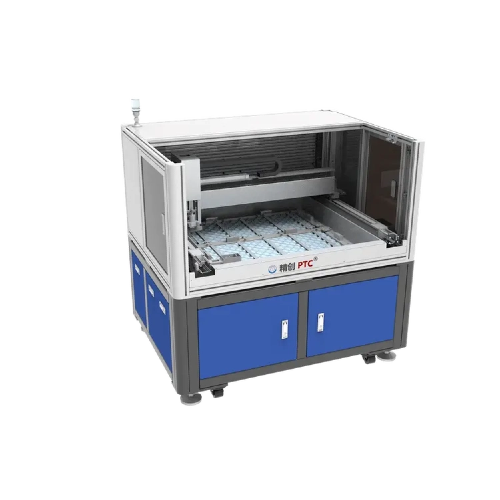
Comparison with Other Non-Destructive Testing Methods
Scanning Acoustic Tomography is often compared to other non-destructive testing methods such as X-ray imaging, ultrasound testing, and infrared thermography. Each of these methods has its strengths, but SAT offers unique advantages in certain applications.
Testing Method | Key Features | Advantages | Disadvantages |
Scanning Acoustic Tomography (SAT) | High-frequency sound waves | High resolution, non-destructive, ideal for internal structural inspection | Can be limited by material thickness or complex surface shapes |
X-ray Imaging | Uses radiation to capture images of internal structures | Can detect deep internal flaws | Potential health risks due to radiation exposure |
Infrared Thermography | Detects heat patterns on the surface of materials | Quick and effective for surface-level defects | Less effective for deep or internal structural issues |
Applications in Different Industries
Semiconductors
In the semiconductor industry, Scanning Acoustic Tomography is used to inspect wafer bonding and other critical components. It can detect tiny defects in semiconductor materials that could lead to failure in electronic devices.
Automotive
For automotive parts, SAT helps in ensuring the structural integrity of components like engine blocks and chassis. It is especially useful for detecting hidden defects that could compromise safety.
Aerospace
In aerospace, SAT is used to inspect composite materials and critical parts like turbine blades. Detecting internal flaws in these parts is crucial to prevent catastrophic failures during flight.
Electronics and Ceramic Board Manufacturing
SAT plays an essential role in inspecting ceramic boards for defects such as delamination, air pockets, or layer bonding issues. Given the miniaturization of electronics, SAT's high resolution is ideal for detecting even the smallest internal flaws.
Conclusion
Scanning Acoustic Tomography (SAT) is revolutionizing non-destructive testing by enabling industries to inspect materials and components with unparalleled precision. Its capability to deliver high-resolution, accurate images of internal structures without causing any damage has made it indispensable in sectors such as aerospace, automotive, and electronics . SAT provides faster results and higher accuracy compared to traditional methods, while also being able to inspect complex geometries, making it an essential tool for quality control and safety assurance.
At Suzhou PTC Optical Instrument Co., Ltd., we are proud to offer advanced SAT solutions designed to meet the unique needs of various industries. Our cutting-edge technology helps manufacturers ensure product integrity, minimize defects, and optimize production processes. Whether you are in need of inspection equipment for aerospace components, automotive parts, or electronics, our SAT systems are equipped to provide the highest level of accuracy and efficiency. For more information or inquiries, we invite you to reach out to us today, and our experts will be happy to assist you in finding the perfect solution for your needs.
FAQ
1. What materials can Scanning Acoustic Tomography be used on?
SAT can be used on a wide range of materials, including metals, ceramics, plastics, composites, and semiconductors. It is particularly effective for materials with complex structures or layered compositions.
2. How does Scanning Acoustic Tomography differ from ultrasound testing?
While both methods use sound waves, SAT typically provides more detailed images and is capable of inspecting more complex materials. SAT is also better suited for high-resolution imaging of internal structural defects.
3. Is Scanning Acoustic Tomography a time-consuming process?
No, SAT is generally faster than other non-destructive testing methods like X-ray or CT scans. The automated nature of the process also helps speed up inspections.
4. Can SAT detect all types of defects in materials?
SAT is excellent at detecting internal defects like cracks, voids, and delamination. However, it is not capable of surface-level defects, which can be better detected through methods like infrared thermography.
5. What industries benefit the most from Scanning Acoustic Tomography?
Industries such as aerospace, automotive, electronics, and semiconductor manufacturing benefit greatly from SAT. Its ability to detect tiny internal flaws makes it essential for ensuring product safety and quality in these high-stakes industries.
 English
 العربية
 Français
 Русский
 Español
 Português
 Deutsch
 italiano
 日本語
日本語 한국어
한국어 Nederlands
 Tiếng Việt
 ไทย
ไทย Polski
 Türkçe
 Bahasa Melayu
 தமிழ்
தமிழ் Filipino
 Bahasa Indonesia
 magyar
 Română
 Čeština
 Српски
 हिन्दी
 فارسی
فارسی Slovenčina
 Slovenščina
 українська
 Suomi
Suomi Հայերեն
 עברית
עברית Latine
 Shqip
Shqip বাংলা
বাংলা Eesti keel
 Oʻzbekcha
 latviešu
 Беларуская мова
 Esperanto


