Please Choose Your Language


Plasma cleaning equipment plays a vital role in modern manufacturing processes by providing high-precision surface treatment solutions for various industries. At Suzhou PTC Optical Instrument Co., Ltd., we offer advanced plasma cleaning technologies that meet the evolving needs of industries such as optics, electronics, and microelectronics. With more than a decade of experience and a commitment to research and development, PTC has become a leading supplier of plasma cleaning equipment, designed to offer efficient, eco-friendly, and effective cleaning and surface preparation solutions. In this article, we will delve into the fundamental aspects of plasma cleaning, including how it works, its applications, and why it has become an essential tool in many manufacturing settings.
Plasma cleaning equipment is a cutting-edge surface treatment technology that uses the unique properties of plasma to clean and prepare surfaces in a highly effective manner. Plasma, often referred to as the fourth state of matter, is created when a gas is ionized by energy such as radio frequency (RF) or microwave energy. This process results in the creation of a mixture of ions, electrons, and neutral particles. When these particles interact with the surface of materials, they can break down and remove contaminants, such as oils, dust, and organic residues, from the surface at a microscopic level.
One of the key advantages of plasma cleaning is that it requires no chemicals, making it an environmentally friendly and safe alternative to traditional cleaning methods, such as solvent cleaning or abrasive techniques. The process is precise and non-destructive, making it ideal for cleaning delicate components, such as microchips, optical devices, and medical implants. By utilizing plasma cleaning equipment, manufacturers can achieve an exceptionally high level of surface cleanliness, which is critical for ensuring the optimal performance of sensitive products.
Plasma is created when a gas is ionized by applying energy, resulting in a state where electrons are detached from atoms, creating a mix of positively charged ions, free electrons, and neutral particles. In plasma cleaning, gases such as oxygen, argon, or nitrogen are used, depending on the specific needs of the application. These gases are subjected to energy (typically RF or microwave energy), causing the gas molecules to break apart and form plasma.
The plasma itself is a highly reactive state of matter with the ability to interact with the surface of materials in a way that traditional cleaning methods cannot. Plasma ions bombard the surface of a material, causing the removal of contaminants, and can even modify the surface properties to enhance adhesion or wettability.
When plasma is generated, the ions and free radicals interact with contaminants on the surface of the material. The high-energy ions in plasma have enough energy to break the chemical bonds of contaminants, such as organic oils, dust, and grease, which are often difficult to remove with traditional cleaning methods. The impact of these plasma particles on the surface results in the dislodgement of contaminants, leaving the surface clean and ready for further processing, such as bonding or coating.
Unlike traditional cleaning techniques, plasma cleaning does not require any mechanical action or harsh chemicals, making it ideal for delicate materials such as semiconductor wafers, medical devices, and optics, where even the slightest damage or contamination can impact performance.
Comparison of Traditional vs Plasma Cleaning
Method | Chemical Use | Surface Damage | Residue Left | Environmental Impact |
Solvent Cleaning | Yes | Possible | Yes | Higher |
Mechanical Cleaning | No | Possible | Yes/No | Medium |
Plasma Cleaning | No | Minimal | No | Low |
Plasma cleaning is used in various industries where high precision and clean surfaces are essential. Its ability to remove contaminants and activate surfaces for subsequent bonding or coating processes makes it indispensable for many applications. Some of the key areas where plasma cleaning is commonly used include:
Cleaning Optical Devices: Plasma cleaning plays a critical role in the optics industry, where components such as lenses, mirrors, and optical fibers require exceptionally clean surfaces. Traditional cleaning methods may leave residue or cause scratches, which could affect optical performance. Plasma cleaning ensures that these components are free of contaminants, ensuring optimal performance in high-precision optical systems.
Electronic Components and PCBs: Plasma cleaning is widely used in the electronics industry to clean printed circuit boards (PCBs) and other electronic components before soldering or coating. This process removes oils, dust, and other contaminants that can interfere with electrical performance and adhesion. Plasma treatment also ensures that the surfaces are primed for effective bonding with solder or adhesive.
Laser Devices and Microchips: Plasma cleaning is essential for cleaning laser devices and microchips, where surface contamination can affect functionality. In these applications, precision is crucial, as even the smallest contaminants can impair the performance of high-tech devices. Plasma cleaning helps to maintain the integrity of these components by providing a clean and stable surface.
The versatility of plasma cleaning allows it to be applied across a wide range of industries, ensuring that components meet the highest standards of cleanliness and performance.
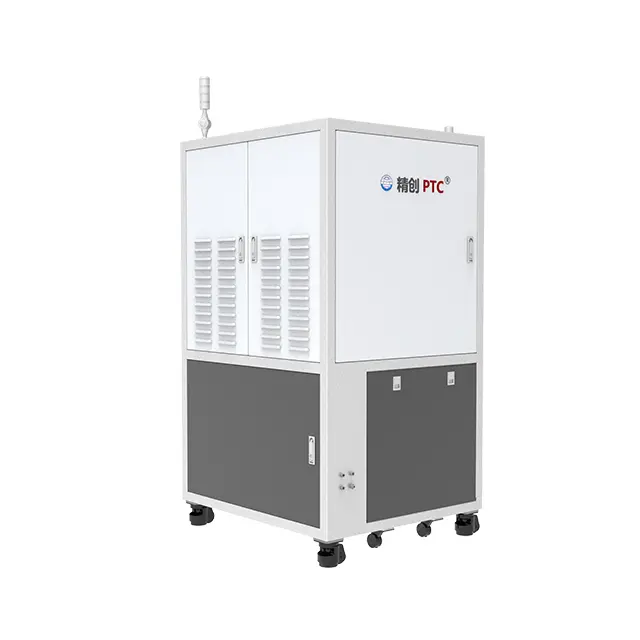
There are several types of plasma cleaning equipment, each designed to address specific industrial needs. The three main types of plasma cleaning systems include:
Vacuum Radio Frequency Plasma Equipment: This type of equipment operates in a vacuum environment and is ideal for cleaning delicate and precision-sensitive components, such as microelectronics and medical devices. The vacuum environment ensures that the cleaning process is carried out in a controlled atmosphere, minimizing the risk of contamination from the surrounding environment.
Atmospheric Pressure Plasma Equipment: Unlike vacuum-based systems, atmospheric pressure plasma equipment operates at atmospheric pressure and is designed for large-area surface treatments. This system is ideal for industries that require surface modification of larger components, such as automotive parts, textiles, and packaging materials.
Vacuum Online Plasma Equipment: This equipment is integrated into automated production lines, allowing for continuous, high-volume cleaning without manual intervention. Vacuum online plasma systems are particularly useful for mass production environments, such as the semiconductor industry, where large quantities of components must be cleaned consistently and efficiently.
Each type of plasma cleaning equipment offers specific advantages depending on the material to be cleaned, the production environment, and the desired outcome.
Plasma cleaning offers numerous advantages over traditional cleaning methods, making it the preferred choice for many manufacturers:
Non-Toxic, Eco-Friendly Surface Prep: Plasma cleaning is an environmentally friendly alternative to chemical-based cleaning methods. Unlike solvent cleaning, which generates toxic waste and uses hazardous chemicals, plasma cleaning is free from such risks and ensures a safe working environment.
Ultra-Fine Contamination Removal: Plasma cleaning is capable of removing even the smallest traces of contamination, ensuring that surfaces are perfectly clean and ready for further processing. This is particularly important in industries such as microelectronics, where even the smallest contamination can cause defects or performance issues.
Improved Adhesion for Downstream Processes: Plasma cleaning not only removes contaminants but also activates surfaces, improving their ability to bond with coatings, adhesives, or other materials. This feature is essential for industries such as automotive, electronics, and packaging, where surface adhesion plays a critical role in product performance.
Plasma cleaning provides a combination of precision, environmental friendliness, and efficiency that traditional methods cannot match.
One of the most common misconceptions about plasma cleaning is that it is simply a replacement for wet chemical cleaning methods. While both methods aim to remove surface contaminants, plasma cleaning offers significant advantages over wet chemical cleaning, such as the absence of chemical residues, minimal surface damage, and a more environmentally friendly process. Wet chemical cleaning often leaves traces of chemicals on the surface, which can affect product performance, while plasma cleaning ensures a clean, residue-free surface.
Another misconception is that plasma-treated parts are unstable or prone to contamination after cleaning. In reality, plasma cleaning creates a stable, activated surface that remains effective for long periods. However, it is essential to handle plasma-treated components with care to avoid re-contamination, especially in environments where particles are prevalent.
Regular maintenance is essential to ensure that plasma cleaning equipment continues to function effectively. Basic maintenance practices include checking the plasma generator, ensuring proper gas flow, and inspecting the vacuum systems. At PTC, our plasma cleaning systems are designed with user-friendly features that make maintenance simple and efficient.
In conclusion, PTC's Plasma Cleaning Equipment offers manufacturers a highly effective, eco-friendly solution for surface cleaning and preparation. By removing contaminants and activating surfaces, plasma cleaning ensures optimal performance for sensitive components such as microchips, optical devices, and medical devices. With its precision, non-toxic nature, and ability to integrate into automated production lines, plasma cleaning has become an essential part of modern manufacturing processes. If you're looking to improve your cleaning process, enhance adhesion, and reduce the environmental impact of your production, PTC's plasma cleaning solutions are the ideal choice.
For more information on how our plasma cleaning equipment can improve your production process, please contact us.
1. What materials can plasma cleaning equipment clean?
Plasma cleaning is suitable for a wide range of materials, including metals, plastics, glass, and ceramics. It is particularly effective for delicate components, such as microchips and optical lenses.
2. How does plasma cleaning compare to traditional cleaning methods?
Unlike traditional cleaning methods, plasma cleaning is chemical-free and provides more precise and efficient cleaning. It removes contaminants at the molecular level, leaving no residue behind.
3. Can plasma cleaning equipment be integrated into automated production lines?
Yes, PTC's Vacuum Online Plasma Equipment is designed for seamless integration into automated production lines, allowing for continuous, high-volume processing with minimal human intervention.
4. Is plasma cleaning environmentally friendly?
Yes, plasma cleaning is an environmentally friendly process as it does not use toxic chemicals or generate hazardous waste. It is a safe alternative to chemical-based cleaning methods.


