Please Choose Your Language


Downstream separation processes often create a critical manufacturing bottleneck. These final stages frequently introduce unacceptable variability. This variability severely compromises the high yields you achieved during earlier fabrication stages. Manufacturers cannot afford these late-stage material losses. You need a highly reliable solution to protect your product. This article analyzes how transitioning away from manual separation methods standardizes throughput. You will discover how implementing fully automated singulation minimizes damaging material stress. We will also explore how stabilizing unit costs transforms your assembly line. This comprehensive evaluation guide directly serves process engineers and production managers. You can use these insights to confidently evaluate machinery upgrades. Readers will learn how eliminating human variables secures absolute production consistency. Your journey toward zero-defect manufacturing begins right here. Proper equipment selection guarantees long-term operational success.
Yield Stabilization: Automated singulation eliminates human-handling variables, drastically reducing edge-chipping, micro-cracking, and cross-contamination.
Predictable Cycle Times: Continuous-load systems and machine-vision alignment guarantee a fixed units-per-hour (UPH) rate, enabling accurate downstream capacity planning.
Material-Specific Calibration: Handling advanced materials requires specialized machinery (e.g., stress-free routing or laser scriber) to maintain tight tolerances without thermal or mechanical degradation.
ROI Beyond Headcount: True return on investment stems from scrap reduction and increased first-pass yield, not just direct labor replacement.
Operators loading plates manually introduce dangerous human inconsistencies. Manual alignment directly leads to highly unpredictable units-per-hour (UPH) rates. Production line bottlenecks form rapidly when operators inevitably tire. Hand-loading procedures disrupt continuous factory workflows entirely. This disruption starves downstream processes of necessary component materials. Capacity planning becomes incredibly difficult under these erratic conditions. You cannot reliably forecast daily output metrics accurately. Managers often overschedule shifts just to meet minimal quotas. Inconsistent cycle times destroy your lean manufacturing principles completely.
Mechanical stress causes severe yield loss across production batches. Manual depaneling physically bends printed circuit boards dangerously. Semi-automated snapping techniques introduce extreme flexural stress dynamically. This physical bending causes hidden, microscopic component fractures. Solder joint fatigue develops rapidly during these rough separation processes. IPC standards strictly warn against exceeding specific microstrain limits. Human hands cannot regulate applied snapping force consistently. These micro-cracks eventually cause catastrophic field failures unexpectedly.
Scrap and rework costs destroy overall operational profitability. Inconsistent cut quality produces jagged burrs along plate edges. Uneven edges prevent proper seating inside tight product housings. These physical defects routinely cause automated optical inspection (AOI) failures. Re-inspecting failed boards wastes extremely valuable engineering time. Scrapping near-finished assemblies represents the most expensive type of manufacturing loss. You lose all the value added during expensive upstream processes. Stabilizing separation processes prevents these massive financial leaks efficiently.
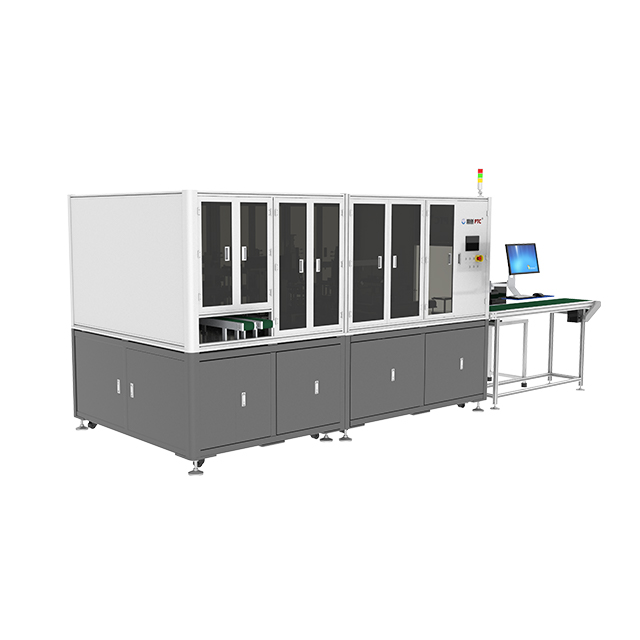
Modern Automatic Singulation Equipment relies heavily on advanced machine vision. High-resolution cameras identify specific board fiducials instantly. Algorithmic alignment systems calculate precise spatial offsets automatically. The machine dynamically compensates for subtle upstream board-level variations. This real-time adjustment ensures exact cut paths every single time. Your production line achieves unprecedented dimensional accuracy consistently. Vision systems completely eliminate the need for perfect mechanical fixturing. You can process highly warped panels safely.
Closed-loop feedback systems maintain perfect operational stability continually. Integrated sensors constantly monitor spindle wear and vibration signatures. Intelligent controllers detect abnormal routing stress instantly. Laser-based systems continuously verify focal point accuracy during operation. The machine automatically adjusts operational parameters during active processing. You get identical cut profiles from the first unit to the thousandth. Active monitoring prevents gradual, undetected quality drift. The system alerts technicians before defect generation occurs.
Automated material handling eliminates physical handling damage entirely. Robotic loaders supply unseparated panels continuously without human intervention. Pick-and-place unloaders gently transfer separated units into shipping trays. In-line sorting mechanisms automatically isolate defective boards from good ones. These advanced handling systems maintain a highly predictable workflow. They protect delicate components from accidental electrostatic discharge events. Your engineers gain complete control over exact cycle times. Machine utilization rates skyrocket immediately.
Advanced materials demand highly specialized, delicate handling approaches. Standard routing mechanisms fail miserably on rigid, fragile materials. Mitigating brittleness requires entirely different cutting philosophies altogether. Specialized Ceramic Substrate Singulation Equipment utilizes high-frequency, low-stress dicing techniques. Some modern systems deploy specialized UV lasers instead of physical blades. These advanced methods actively prevent catastrophic micro-cracking events. They ensure perfectly smooth edges on extremely brittle alumina substrates. Your material scrap drops close to zero immediately.
Managing thermal and mechanical loads requires careful process engineering. You must thoroughly evaluate any copper-clad Ceramic Singulation Machine before factory deployment. These complex hybrid materials react poorly to aggressive mechanical separation. The cutting process demands precise, targeted liquid cooling applications. You must ensure completely burr-free edge finishes for proper mounting. Proper temperature control prevents dangerous structural delamination. This delamination typically occurs between the conductive copper layer and the ceramic base. Separating these layers destroys the component completely.
Tooling compatibility dictates your ultimate processing success rates. You must perfectly match your cutting mechanism to the specific substrate. Available tooling choices include diamond blades, coated routers, or advanced lasers. Engineers must analyze the specific material density carefully before selection. The substrate's unique thermal conductivity profile also guides your tooling choices. Using incorrect tooling guarantees rapid wear and exceptionally poor edge quality. Proper matching extends expensive consumable lifespans significantly. You gain superior edge finishes consistently.
Evaluating machinery requires balancing several competing production priorities carefully. You must weigh raw throughput requirements against necessary precision levels. High UPH goals often compromise extreme cutting tolerances inadvertently. Achieving ±0.01mm accuracy usually demands significantly slower cutting speeds. You must determine the absolute minimum tolerance your specific product requires. Over-specifying accuracy needlessly slows down your entire manufacturing line.
We must carefully compare various cutting technologies objectively before purchasing.
Assess your primary substrate material thickness thoroughly.
Calculate your maximum allowable mechanical stress limits accurately.
Determine your strict factory floor particulate contamination rules.
Evaluate your available cleanroom utility connections carefully.
Spindle routing works best for thicker, standard FR4 substrates. This physical cutting method generates significant particulate debris continuously. You must evaluate the machine's dust extraction capabilities thoroughly. Conversely, laser ablation excels for flexible or highly sensitive miniature components. Lasers exert absolutely zero mechanical force on the delicate substrate. However, you must carefully evaluate the resulting heat-affected zone (HAZ). Uncontrolled heat can easily melt adjacent conductive traces.
Technology Type | Ideal Material Types | Primary Advantages | Key Constraints |
|---|---|---|---|
Spindle Routing | FR4, Thick Substrates | High throughput, highly cost-effective | Generates dust, applies mechanical stress |
Laser Ablation | Flex circuits, Thin ceramics | Zero mechanical stress, extreme precision | Potential HAZ, slower on thick boards |
Saw Dicing | Rigid Ceramics, Glass | Excellent edge quality, straight line cuts | Requires cooling water, limits custom shapes |
Software integration defines modern smart factory operational capabilities. Factory integration directly impacts internal quality assurance traceability processes. You must verify SECS/GEM communication protocol compliance immediately. Manufacturing Execution System (MES) integration allows seamless automated recipe downloads. Advanced software effortlessly tracks continuous batch data for comprehensive traceability. This specific data visibility proves absolutely essential for aerospace and medical manufacturers.
Physical facility constraints heavily dictate your final installation strategy. You must factor in the exact machine footprint carefully beforehand. Upgrading Singulation Equipment requires adequate floor space planning. Cleanroom compatibility dictates highly specific exhaust air filtration requirements. High-power industrial lasers demand robust electrical infrastructure upgrades immediately. Proper vacuum requirements ensure critical hazardous dust mitigation. Ignoring facility requirements causes severe operational installation delays.
Maintenance strategies directly affect overall equipment effectiveness (OEE). We need highly transparent assumptions regarding consumable replacement schedules. Router bits and dicing blades degrade predictably over continuous time. Laser lenses require meticulous regular cleaning and occasional replacement. Preventive maintenance downtime strictly affects your maximum daily production capacity. Managers must schedule these technical interventions during planned shift changes. Proactive maintenance prevents catastrophic mid-batch machine failures completely.
Operator adoption relies heavily on proper technical training execution. We observe a massive shift from manual labor to machine supervision. Your workforce faces a steep technical learning curve initially. Programming new complicated cut paths requires advanced spatial reasoning skills. Managing complex vision software demands highly focused computer literacy. You must invest heavily in comprehensive initial vendor training programs. Well-trained operators maximize your expensive equipment investments immediately. They troubleshoot minor errors routinely.
Consistent production completely relies on eliminating unpredictable human variables. You must carefully control the most critical stage of physical separation. Automated systems strip away the dangerous guesswork from your daily operations.
Request extensive proof-of-concept testing using your exact production materials.
Validate cut edge quality under severe magnification before final procurement.
Compare specific equipment capability matrices against your current bottlenecks.
Consult directly with experienced factory software integration specialists.
Take decisive action to modernize your separation processes today. Secure your yields and transform your factory floor.
A: By eliminating handling stress and cutting deviations, automated systems typically stabilize FPY. They often raise it by entirely eliminating separation-induced defects like micro-cracking and component fracture.
A: ROI is usually achieved within 12-24 months. Engineers calculate this through a combination of drastically reduced scrap rates, lower labor allocation costs, and significantly higher hourly throughput.
A: Yes, many machines offer interchangeable tooling options. However, highly specialized materials like copper-clad ceramics often require dedicated parameter setups or specific machine configurations to maintain optimal cutting consistency.