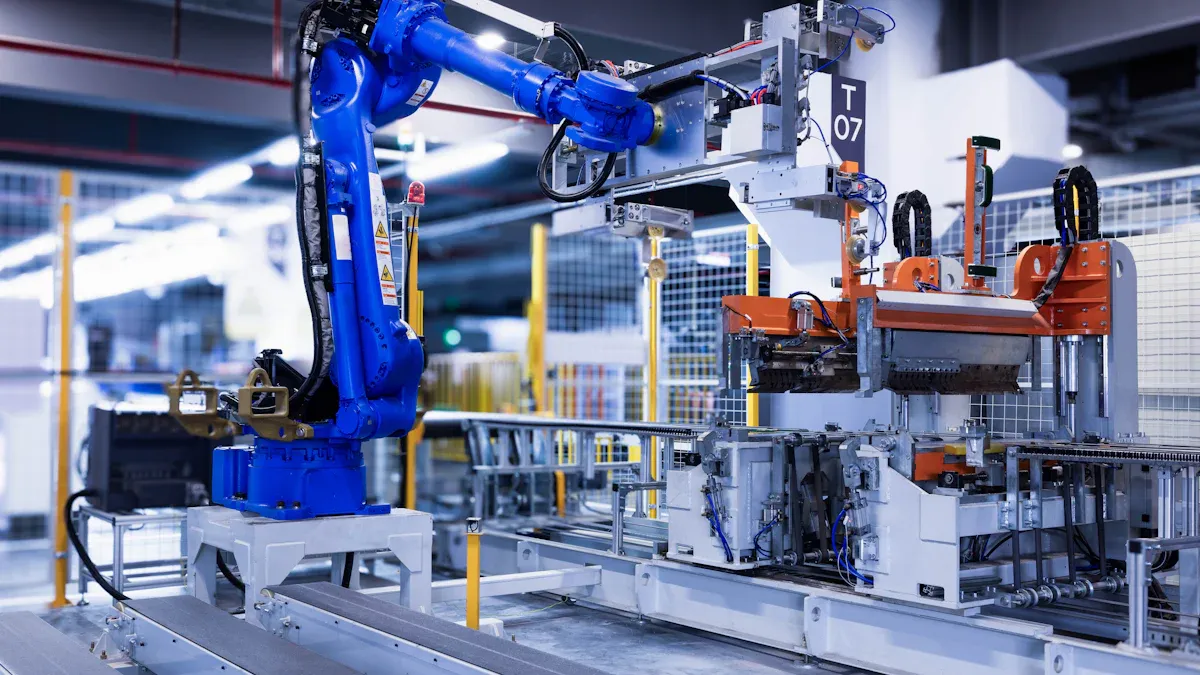
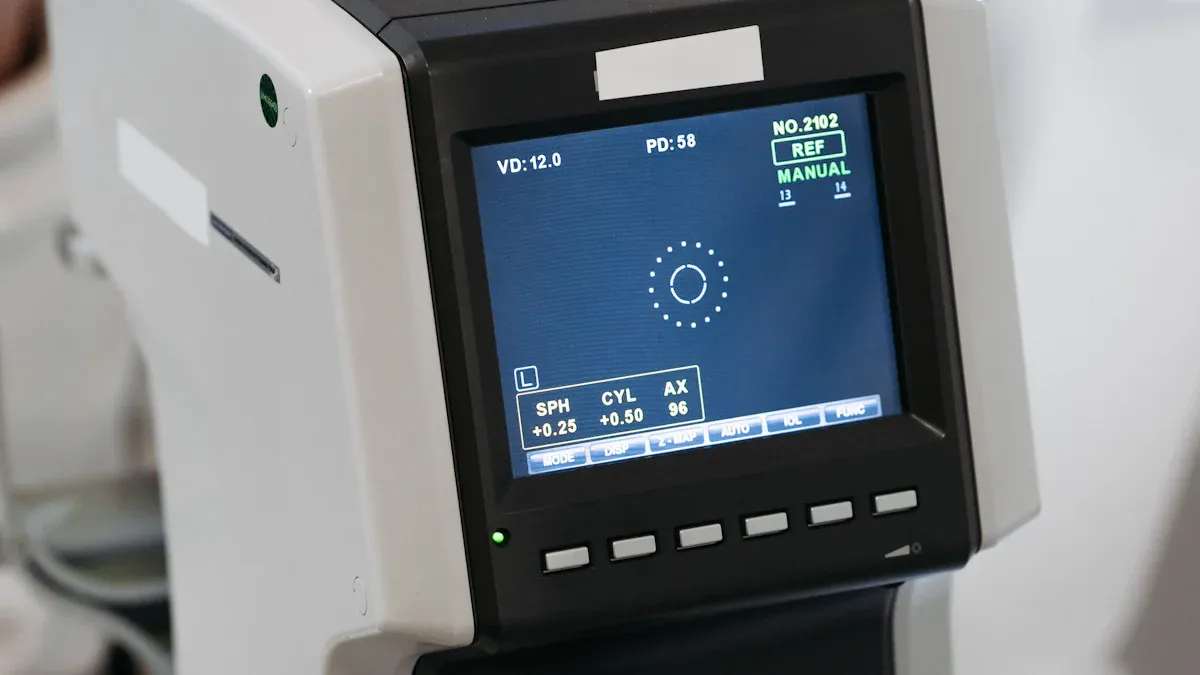
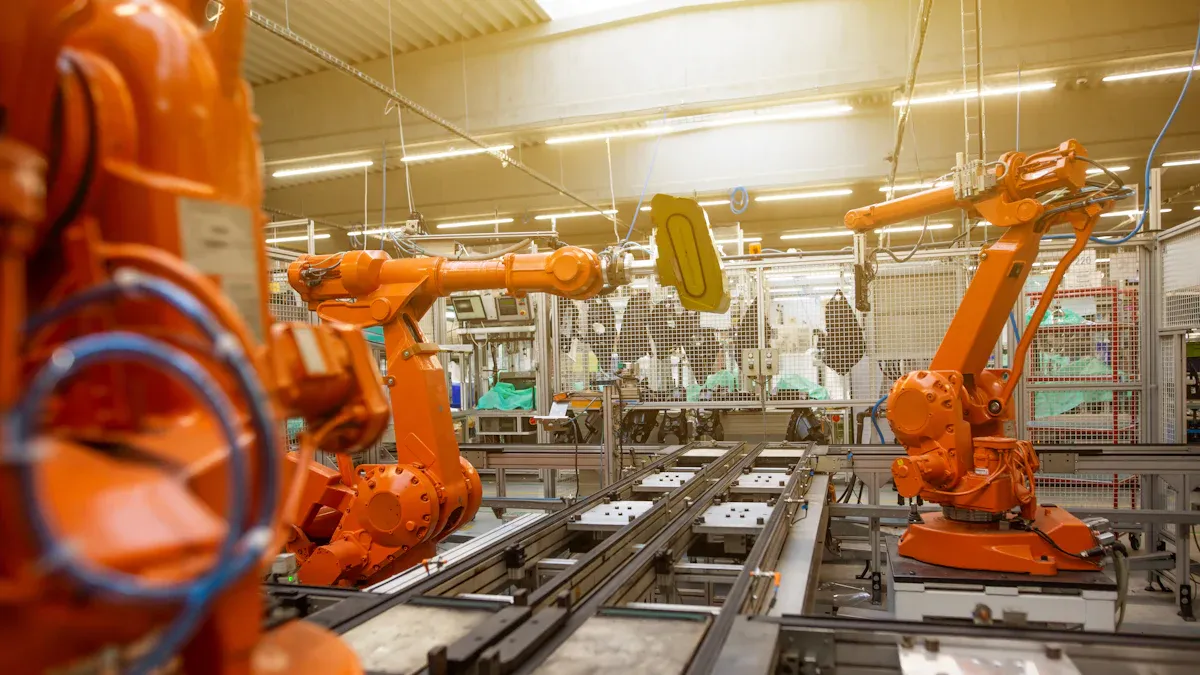
Automatic optical inspection takes your quality assurance to the next level by automating defect detection and improving efficiency. You benefit from advanced cameras and machine vision software integrated into AOI equipment, which spot issues faster and more accurately than manual checks. AOI equipment delivers measurable results, such as up to a 40% drop in defect rates and over 35% gains in production efficiency.
Metric | Improvement |
Defect Rate | Up to 40% fewer |
Production Efficiency | 35% increase |
You see these advantages with AOI equipment across electronics and other high-precision industries.
Key Takeaways
AOI equipment automates defect detection, improving efficiency and accuracy in manufacturing.
Using AOI can reduce defect rates by up to 40% and increase production efficiency by over 35%.
AOI systems provide consistent inspection results, eliminating human error and ensuring uniform quality across production lines.
Real-time feedback from AOI allows for immediate process adjustments, reducing waste and preventing defects.
Data collected from AOI inspections helps identify trends, enabling targeted improvements in production processes.
AOI technology adapts to various manufacturing needs, offering options like inline, online, and offline inspections.
Investing in AOI equipment can lead to significant cost savings by minimizing rework and returns.
AOI is essential for meeting strict industry standards in sectors like electronics, automotive, and medical device manufacturing.
What Is AOI Equipment?
AOI Equipment Definition
You use AOI equipment to automate visual inspection in manufacturing. AOI stands for automatic optical inspection. This technology helps you find defects quickly and accurately. AOI equipment uses cameras, lighting systems, and processing software to examine products. You rely on these tools to check for flaws that might affect quality. The system compares images of your products to standards and highlights any issues.
AOI equipment gives you a reliable way to spot problems early. You reduce the risk of faulty products reaching customers.
Here is a table showing the main components and technologies in AOI equipment:
Component/Technology | Description |
Cameras | Capture images of the product for evaluation, with modern systems using high-resolution sensors. |
Lighting Systems | Essential for clear visibility, using LEDs for consistent illumination of inspected components. |
Processing Software | Analyzes images against predefined standards to identify defects during inspection. |
Core Functions in Quality Control
You depend on AOI equipment to perform several key functions in quality control:
Detect defects such as missing parts or incorrect assembly.
Ensure products meet your standards every time.
Provide fast and consistent inspection results.
Reduce manual labor and human error.
AOI equipment helps you maintain high quality across your production line. You can trust the system to catch mistakes that manual inspection might miss.
Types of AOI Systems
Inline, Online, and Offline AOI
You can choose from different AOI system configurations based on your needs. Inline AOI integrates directly into your manufacturing line. It inspects products in real time as they move through production. Online AOI uses inspection stations within the line but does not connect directly. This setup works well for high-speed production and random sampling. Offline AOI inspects products away from the production line. You get detailed evaluations in a controlled environment, but the process takes more time.
Here is a table comparing the main types of AOI systems:
AOI Type | Description | Application and Effectiveness |
Inline AOI | Integrated into the manufacturing line for real-time inspections. | Limited inspection times; effective for continuous production monitoring. |
Online AOI | Inspection stations within the line, not directly integrated. | Ideal for high-speed production; inspects random samples without halting the line. |
Offline AOI | Inspects products outside the production line in a controlled environment. | Allows for detailed inspections; slower output but more comprehensive evaluations. |
2D and 3D AOI Systems
You also select between 2D and 3D AOI systems. 2D AOI uses cameras to check surfaces for defects like misalignments or soldering problems. 3D AOI creates topological maps of your products. You get a full 360-degree view and depth analysis, which is useful for complex inspections.
AOI Type | Description | Application and Effectiveness |
2D AOI | Utilizes 2D cameras for surface-level defect detection. | Effective for identifying misalignments and soldering defects. |
3D AOI | Advanced systems that create topological maps of items. | Provides a 360-degree view; useful for complex inspections. |
You gain flexibility by choosing the right AOI system for your manufacturing process. AOI equipment adapts to your needs, whether you require speed, detail, or advanced analysis.
How Automatic Optical Inspection Detects Defects
AOI Inspection Process
You rely on automatic optical inspection to catch defects early and keep your production line running smoothly. AOI equipment mimics the human eye but works with much greater speed and consistency. The system uses cameras and lighting to capture clear images of each product. Image processing algorithms then analyze these images for any anomalies, such as solder shorts or misaligned components. When the system finds a discrepancy, it flags the issue for review before the product moves to the next stage.
In a high-volume manufacturing environment, you follow a structured AOI inspection process. Each stage targets specific types of defects to ensure thorough quality control. Here is a typical workflow:
Stage | Description |
Post-Solder Paste Inspection | Verifies stencil alignment and paste volume after solder paste printing. |
Post-Component Placement | Checks for missing, misplaced, or misaligned components before soldering. |
Post-Reflow AOI | Inspects for solder joint defects after reflow soldering. |
Bare Board AOI | Inspects etching quality, shorts, opens, and registration errors before assembly. |
AOI is crucial for detecting surface defects, especially in high-density, high-performance circuit boards. You depend on it for early fault detection, which helps maintain assembly reliability.
Types of Defects Detected
You use AOI equipment to identify a wide range of defects that can affect product quality. The system excels at finding issues that manual inspection might miss, especially in complex assemblies.
Defect Type | Description | Examples of Defects |
Soldering Defects | Issues related to solder joints and connections. | Solder Bridging, Insufficient Solder Joints |
Component Placement Defects | Problems with the positioning of components on the board. | Missing Components, Misplacement |
Surface and Dimensional Defects | Defects affecting the surface quality and dimensions of components. | Surface Defects, Pad Damage |
Missing Components
You often face challenges with missing components, especially in high-speed assembly lines. AOI inspection quickly scans each board and compares it to the reference design. If a component is missing, the system highlights the exact location. This rapid feedback allows you to correct errors before they reach later stages of production.
Soldering and Assembly Issues
Soldering defects can cause major problems in electronic products. AOI equipment checks every solder joint for issues like bridging, insufficient solder, or cold joints. The system also detects assembly problems, such as misaligned or rotated parts. By catching these defects early, you reduce the risk of product failures and costly rework.
Speed and Accuracy vs. Manual Inspection
You gain a significant advantage with AOI equipment because it delivers both high inspection speed and superior accuracy. Manual inspection methods typically achieve detection accuracy rates between 60% and 80%. AOI systems, on the other hand, reach detection accuracy levels of 97% to 99.5%. This leap in precision means you catch nearly all defects before products leave the line.
Inspection Method | Detection Accuracy |
Manual Inspection | 60-80% |
AOI Equipment | 95-99.5% |
You also benefit from the speed of automatic optical inspection. AOI systems can inspect over 5,000 components per hour, while manual inspection usually manages only 500 to 800 components per hour. This high throughput is essential for meeting production goals and minimizing rework. Human inspectors can get tired and miss defects, but AOI maintains consistent performance throughout every shift.
AOI inspection offers superior repeatability and precision over manual methods.
Automated optical inspection is faster and more efficient, making it ideal for high-volume production.
Manual inspectors may miss defects due to fatigue, which affects both speed and accuracy.
With AOI, you achieve reliable, repeatable, and fast inspections that help you maintain high product quality and reduce costs.
Consistency and Repeatability in AOI Inspection
Uniform Standards Across Production
You want every product to meet the same high standards, no matter which line or facility produces it. AOI equipment helps you enforce these standards by using the same inspection criteria everywhere. The system checks each item with the same precision, so you get reliable results across all your production lines. This approach reduces the risk of variation and helps you deliver consistent quality control.
Here is a table that shows how automatic optical inspection supports uniform standards and improves your process:
Advantage | Description |
Reduction in labor costs | AOI technology significantly lowers the costs associated with manual inspections. |
Increased inspection efficiency | It enhances the speed and accuracy of inspections in circuit board assembly. |
Unification of inspection standards | AOI standardizes the inspection process, reducing variability caused by human factors. |
Elimination of inconsistencies | It ensures consistent inspection results, which is vital for maintaining quality across production. |
Prompt detection of defects | AOI quickly identifies and isolates defective products, ensuring high outgoing quality. |
You can see that AOI equipment not only saves money but also ensures that every product meets your quality assurance goals.
Eliminating Human Subjectivity
When you rely on manual inspection, different people may judge defects in different ways. This can lead to mistakes and uneven results. AOI inspection removes this problem by using data-driven methods. The system uses real-time feedback to adjust tolerance values automatically. You do not have to depend on an engineer's intuition or experience. Instead, the process becomes more reliable and less likely to produce false alarms. This method gives you a more stable and trustworthy quality assurance process.
AOI systems optimize inspection settings based on actual production data. You get fewer errors and more accurate results, which helps you maintain high standards.
Compliance with Industry Requirements
You must follow strict industry standards to keep your products safe and reliable. Many industries require you to use AOI equipment to meet these rules. For example:
The IPC-A-610 standard requires you to check the quality of conformal coatings on circuit boards.
Automatic optical inspection is recommended to verify coating quality and detect defects, helping you meet IPC-A-610 requirements.
If you do not comply with these standards, you risk costly recalls and unhappy customers.
Using AOI helps you avoid these problems and protects your company's reputation.
AOI gives you the tools to meet industry regulations and deliver products that meet customer expectations. You can trust this technology to support your quality assurance efforts and keep your business competitive.
Real-Time Feedback and Data Collection with AOI
Immediate Process Adjustments
You gain a major advantage when you use AOI equipment for real-time feedback. The system integrates directly into your production line. It inspects each product as it moves through the process. When AOI detects a defect, it alerts you right away. You can stop the line or adjust machine settings before more faulty products are made. This quick response helps you reduce waste and avoid costly rework.
Here is a table that shows how AOI supports immediate process adjustments:
Feature | Description |
Integration into Production | AOI systems work inline, inspecting products in real time. |
Early Defect Detection | You spot problems early and fix them before they spread. |
Data Collection for Optimization | AOI gathers data to help you improve your process and boost efficiency. |
You also receive real-time feedback on machine performance. This lets you make changes to prevent defects from repeating. When AOI finds a pattern of flaws, you can adjust your process before mass production begins. This keeps your quality assurance strong and your production line efficient.
Data-Driven Quality Improvements
AOI inspection gives you more than just defect detection. The system collects large amounts of data during every inspection. You can use this data to find trends and patterns in your production. For example, you might notice that certain defects happen more often at specific times or on certain machines. With this information, you can target the root causes and make lasting improvements.
You can:
Track defect rates over time to measure progress.
Identify which steps in your process need attention.
Set clear goals for reducing defects and improving quality.
Tip: Use AOI data to create reports for your team. This helps everyone stay focused on quality and supports continuous improvement.
When you rely on data from automatic optical inspection, you make smarter decisions. You improve your products and keep your customers satisfied.
Integration with Manufacturing Systems
You can connect AOI equipment to your manufacturing execution systems (MES) or enterprise resource planning (ERP) platforms. This integration helps you manage your production more smoothly. AOI shares inspection results and process data with your other systems. You get a complete view of your operations in one place.
Standardization and interoperability are important for this connection. Many manufacturers use standards like ISA-95 and OPC UA. These standards make sure AOI and your enterprise systems can talk to each other. When you link AOI with MES or ERP, you improve data accuracy and reduce operational costs. You also streamline your workflow, making it easier to spot issues and act quickly.
AOI equipment supports your quality assurance goals by giving you real-time insights and connecting with your existing systems. You can trust this technology to help you deliver better products and run a more efficient factory.
Reducing Human Error with AOI Equipment
Automation of Inspection Tasks
You can rely on AOI equipment to automate the most repetitive and detail-oriented inspection tasks. The system uses high-resolution cameras and advanced image processing algorithms to capture and analyze every product. This automation means you do not have to depend on manual checks for every item, which often leads to missed defects. AOI inspection works quickly and consistently, helping you catch problems before they become costly.
Here is a table showing how automation improves your inspection process:
Description | Key Benefit |
High-resolution cameras capture detailed images for better defect identification. | Improved defect detection rates |
Advanced image processing algorithms enhance accuracy and reduce false positives. | Increased reliability in defect detection |
Automated optical inspection detects defects in a timely manner. | Reduced rework and improved production efficiency |
You see that automation not only increases accuracy but also speeds up your workflow. You can trust the system to handle large volumes without losing focus or making mistakes.
Minimizing Oversight and Fatigue
Manual inspection often leads to errors because people get tired or distracted. You might miss small defects after hours of repetitive work. AOI equipment solves this problem by working at the same high level all day. The system does not get tired or lose concentration. You get reliable results from the first product to the last.
AOI equipment checks every product with the same attention to detail.
You avoid mistakes caused by fatigue or oversight.
The system helps you maintain high quality, even during long production runs.
Tip: Use AOI to support your team during peak production times. You will see fewer errors and higher output.
Enhancing Operator Roles
When you use AOI equipment, your team can focus on more valuable tasks. Operators no longer need to spend hours looking for tiny defects. Instead, they can review flagged issues, maintain equipment, or analyze inspection data. This shift makes their work more interesting and meaningful.
You empower your staff to:
Respond quickly to quality alerts.
Improve inspection programs based on real data.
Take on roles in process improvement and equipment management.
AOI inspection does not replace your team. It gives them better tools and more time to focus on quality and efficiency.
Efficiency and Throughput Gains from AOI
Faster Inspection Processes
You want your inspection process to keep up with your production speed. AOI systems help you achieve this goal. These systems use advanced cameras and software to inspect each product in just 10 to 20 seconds. Manual inspection takes much longer because people need time to focus and check every detail. AOI does not get tired or distracted, so you get the same fast results all day.
Here is a table that compares inspection speeds and consistency:
Inspection Method | Average Speed | Notes |
AOI Systems | 10-20 seconds per circuit board | Faster, ideal for inline inspection. |
Manual Inspection | Slower due to human factors | Limited by human speed and consistency. |
You see that AOI systems deliver higher throughput and better consistency than manual methods. This improvement helps you meet tight deadlines and keep your production line moving.
Scaling Production with Quality
You can scale your production without losing control over product quality. AOI uses high-powered cameras and smart algorithms to catch defects before they become bigger problems. The system checks thousands of components in seconds, so you can increase your output and still maintain high standards.
AOI detects defects early, so only high-quality products move forward.
The system reduces human error, which means fewer mistakes and less rework.
You can adapt AOI to different product lines, so you keep quality consistent across your factory.
Faster inspection lets you meet customer demands without sacrificing quality.
Early detection lowers the risk of returns and recalls, which saves you money.
Tip: Use AOI to support new product launches or high-volume orders. You will see fewer defects and more satisfied customers.
Cost Savings and Reduced Rework
You save money when you use AOI in your manufacturing process. The system helps you catch problems before they leave the factory, which means fewer returns and less rework. Many companies have seen big savings after switching to AOI.
Here is a table with real-world results:
Case Study | Result | Cost Savings |
Consumer Electronics Manufacturer | 30% reduction in field returns | $2M annual savings |
Aerospace Electronics Producer | 20% increase in first-pass yield | $5M savings in rework costs |
You can see that AOI leads to fewer defective products and lower costs. When you reduce rework and returns, you free up resources for new projects and growth.
AOI gives you the tools to improve efficiency, boost throughput, and protect your bottom line. You can trust this technology to help you deliver better products, faster.
AOI Equipment in Manufacturing Industries
Electronics Manufacturing
You see some of the most advanced uses of AOI equipment in electronics manufacturing. AOI systems help you inspect every circuit board for defects that could cause failures. You can use AOI for both inline and offline inspections. Inline AOI checks products as they move through the line. Offline AOI gives you a detailed look at finished boards. Both methods help you catch problems early.
Here is a table showing how AOI improves quality control in real-world electronics applications:
Application | Outcome | Example |
Off-line AOI for final inspection | 20-30% improvement in defect detection accuracy and rework reduction | Automotive electronics suppliers |
Detailed quality audits | Identifies defects missed during inline inspection | Contract manufacturers reworking flagged batches |
Fine-tuning manufacturing processes | Minimizes inline rejections and improves yield | Circuit board assembly plants calibrating machines |
You can also find examples where AOI makes a big difference:
AOI helps you deliver reliable electronics by catching defects before products reach your customers.
Automotive Applications
You rely on AOI technology to keep automotive parts safe and reliable. AOI systems use advanced algorithms to detect and classify defects with high accuracy. This precision is important for your quality control and process reliability. In automotive manufacturing, AOI checks for issues like soldering errors and misaligned components. The system finds these problems early, so you can fix them before they cause bigger issues.
Machine vision AOI has changed how you inspect car seats and other parts. The technology gives you fast and precise results. You reduce human error and improve efficiency. AOI also helps you avoid costly rework and material waste. When you use AOI, you make your production line more reliable and your products safer for drivers and passengers.
AOI equipment helps you meet strict automotive standards and keeps your reputation strong.
Medical Device Production
You need AOI equipment to ensure the safety and quality of medical devices. AOI systems check complex components for defects that could lead to contamination or assembly errors. This is very important for devices like pacemakers and imaging equipment. Even a small mistake can have serious consequences.
You face strict regulations in medical device manufacturing. AOI helps you meet these rules by finding defects before products leave the factory. Many companies now use AOI to achieve near-zero defect rates. This technology supports your goal of making safe, reliable devices for hospitals and patients.
AOI protects the integrity of medical devices.
You prevent costly recalls and protect patient safety.
AOI helps you keep up with growing regulatory demands.
By using AOI, you show your commitment to quality and safety in every device you produce.
Aerospace and Industrial Sectors
You face some of the toughest quality demands in aerospace and industrial manufacturing. AOI equipment gives you the precision and reliability needed to meet these strict requirements. In these sectors, even the smallest defect can lead to major safety risks or costly failures. You need inspection systems that catch every issue before products leave your facility.
AOI systems help you maintain high standards by detecting a wide range of surface defects. For example, you can spot bubbles or cracks in the solder mask on circuit boards . These defects can cause electrical failures or reduce the lifespan of critical components. AOI also checks that the solder mask aligns perfectly with the circuit board design. This prevents exposure of conductive areas, which could lead to short circuits or other hazards.
AOI equipment identifies color and finish issues, even when solder mask finishes vary.
You verify that solder masks are applied uniformly, so your products withstand harsh environments.
Modern circuit boards often use high-density interconnects. AOI provides the precision needed to inspect these complex designs.
Aerospace and industrial sectors require detection of even the smallest defects. AOI delivers this level of accuracy.
You benefit from AOI's ability to inspect thousands of components quickly and consistently. This technology reduces the risk of human error and ensures that every product meets your quality benchmarks. You can trust AOI to deliver reliable results shift after shift.
AOI systems play a key role in helping you comply with industry regulations. You avoid costly recalls and protect your reputation by catching defects early.
The global market for automated inspection systems continues to grow. This trend shows that more aerospace and industrial manufacturers rely on AOI to handle increasing complexity and higher quality standards. As your products become more advanced, you need inspection tools that keep up with new challenges.
AOI equipment also supports your efforts to improve efficiency. You collect inspection data in real time, allowing you to adjust processes and prevent recurring issues. This data-driven approach helps you maintain consistent quality while reducing waste and rework.
If you want to learn more about AOI solutions for aerospace and industrial applications, you can explore specialized providers like PTC. Their expertise in automated inspection can help you achieve your quality goals.
Implementing AOI Equipment Technology
Assessing Inspection Needs
You should start by understanding what your production line requires from AOI equipment. Consider these important factors before making a decision:
Recognition capabilities: Decide if you need 2D or 3D inspections and check which defects the system can find.
Speed and accuracy: Match the AOI system's speed to your production rate and make sure it delivers the precision your boards need.
Software functionality: Look for features like automated defect detection and a user-friendly interface.
Scalability and compatibility: Make sure the equipment works with different circuit board models and fits with your current systems.
After-sales service: Check the supplier's training, maintenance, and technical support.
You can explore AOI solutions from trusted brands like PTC. Their products, such as those found at ptc-stress.com, offer a range of options for different inspection needs.
Tip: A careful assessment helps you choose AOI equipment that supports your quality assurance goals and improves product quality.
System Integration and Training
You need to plan how AOI equipment will fit into your existing workflow. Start by connecting the AOI system to your Manufacturing Execution System (MES) and other tools, such as SPI or X-ray machines. This integration allows you to track inspection results in real time and respond quickly to any issues.
Train your team to review AOI results accurately. Update inspection plans for each board and keep your software and part lists current. Monitor false alarm rates and adjust settings as you gain experience. Begin with careful settings and improve them over time.
Note: Well-trained staff and a connected system help you get the most from your AOI investment. You will see better quality assurance and faster problem-solving.
Cost-Benefit Analysis
You should look at both the costs and the savings when you consider AOI equipment. Entry-level systems cost between $30,000 and $50,000. Mid-tier systems range from $50,000 to $100,000. High-end models can reach $200,000. Installation and integration may add $5,000 to $15,000, while programming and calibration can require $10,000 to $30,000. Annual maintenance costs range from $500 to $2,500, and software licenses may cost $2,000 to $10,000 each year.
A typical mid-range AOI system costs about $100,000. You might spend $10,000 a year on maintenance and $5,000 for initial training. If you reduce your defect rate from 5% to 1%, you could save $240,000 a year in rework costs. Many manufacturers see a full return on investment within 6 to 12 months, especially in high-volume production.
AOI equipment helps you lower costs, improve quality assurance, and boost your bottom line.
You gain stronger quality control with AOI equipment. You detect defects faster, improve consistency, and boost efficiency. The table below shows how AI-driven AOI systems transform your results:
Feature | Benefit |
AI algorithms in 3D AOI | Higher throughput, fewer false defects |
Real-time monitoring and analytics | Faster response, 20% less downtime |
Integration in workflow | Fewer defective goods reach customers |
You see defect rates drop below 1 PPM and first-pass yield rise above 99%. As AI and cloud technology advance, you will find AOI even more essential for future manufacturing success.
FAQ
What does AOI stand for in manufacturing?
AOI means Automatic Optical Inspection. You use AOI equipment to check products for defects using cameras and software. This technology helps you improve quality control and reduce errors.
How does AOI equipment improve defect detection?
You rely on AOI systems to spot defects faster and more accurately than manual inspection. The equipment uses high-resolution cameras and smart algorithms to find issues that people might miss.
Can AOI systems inspect different types of products?
You can use AOI equipment for many products, including electronics, automotive parts, and medical devices. AOI adapts to different shapes and sizes with customizable settings.
Is AOI equipment difficult to integrate into my production line?
You can integrate AOI systems with your existing workflow. Most AOI equipment connects easily to manufacturing software. You may need some training for your team, but the process is straightforward.
What is the difference between 2D and 3D AOI?
2D AOI checks surfaces for visible defects. 3D AOI creates a topographical map, letting you see height and depth. You choose 3D AOI for complex inspections that need more detail.
How much does AOI equipment cost?
You find entry-level AOI systems starting around $30,000. Advanced models can cost up to $200,000. You should consider installation, training, and maintenance costs. PTC offers solutions at ptc-stress.com.
Does AOI equipment reduce human error?
You use AOI to automate inspections and minimize mistakes caused by fatigue or oversight. The system works consistently, helping you maintain high quality throughout production.
Where can I learn more about AOI solutions?
You can visit ptc-stress.com to explore AOI equipment options and get expert advice for your manufacturing needs.
 English
 العربية
 Français
 Русский
 Español
 Português
 Deutsch
 italiano
 日本語
日本語 한국어
한국어 Nederlands
 Tiếng Việt
 ไทย
ไทย Polski
 Türkçe
 Bahasa Melayu
 தமிழ்
தமிழ் Filipino
 Bahasa Indonesia
 magyar
 Română
 Čeština
 Српски
 हिन्दी
 فارسی
فارسی Slovenčina
 Slovenščina
 українська
 Suomi
Suomi Հայերեն
 עברית
עברית Latine
 Shqip
Shqip বাংলা
বাংলা Eesti keel
 Oʻzbekcha
 latviešu
 Беларуская мова
 Esperanto