Scanning Acoustic Tomography (SAT) is a cutting-edge non-destructive testing (NDT) technique used to visualize internal structures and detect defects within materials. It leverages the principles of sound wave propagation and acoustic impedance variations to generate detailed cross-sectional images of the internal structures of various materials, including metals, composites, ceramics, and plastics. SAT is a powerful tool, particularly in industries where precision and material integrity are crucial, such as semiconductor manufacturing, aerospace, automotive, and electronics.
Scanning Acoustic Tomography (SAT) has become an essential method for inspecting the internal structures of materials without causing damage. As industries demand higher precision and reliability in materials, SAT has emerged as a valuable tool for ensuring the quality and safety of products. Unlike traditional imaging techniques like X-ray, SAT provides higher resolution, especially in detecting minute defects that might not be visible through conventional methods. In this article, we will explore the underlying principles of SAT, how it works, its advantages, and its applications.
1. Understanding the Basic Principle of Acoustic Tomography
What is Acoustic Tomography?
Acoustic tomography, also known as scanning acoustic tomography, is a method of imaging that involves transmitting sound waves through a material to detect internal structures or anomalies. The principle behind SAT is that sound waves behave differently when passing through materials with varying acoustic properties. These differences are captured and processed to produce detailed images of the material's internal features.
In SAT, ultrasonic sound waves are employed, which are high-frequency sound waves that are not audible to the human ear. When these waves travel through a material, they encounter various interfaces, such as cracks, voids, or boundaries between different material layers. Each interface causes a reflection, refraction, or scattering of the sound waves, which are then collected by sensors placed on the surface of the material.
The key difference between acoustic tomography and other forms of tomography, such as X-ray or MRI, is the use of sound waves instead of electromagnetic radiation or magnetic fields. This makes SAT safer, as it does not involve the use of ionizing radiation.
2. Core Technology: The Use of Ultrasound Waves
How Ultrasound Waves Work in SAT
At the heart of scanning acoustic tomography lies the use of ultrasound waves. These waves are generated by ultrasonic transducers that emit high-frequency sound waves into the material. The ultrasound waves propagate through the material and interact with various internal structures. The interaction of the waves with the material produces signals that are recorded by the same transducer or other sensors placed around the sample.
The sound waves behave in different ways depending on the type of material they encounter. Some materials absorb the sound waves, while others reflect or transmit them. These interactions provide critical information about the internal structures of the material, including its density, elasticity, and any possible internal defects.
Acoustic Impedance
One of the primary factors that affect the behavior of sound waves in SAT is acoustic impedance. Acoustic impedance is the resistance of a material to the propagation of sound waves, determined by the material's density and the speed of sound within it. When sound waves move from one material to another with a different acoustic impedance, part of the sound is reflected, and part is transmitted.
This variation in the sound wave's behavior at the interface of materials is what allows SAT to generate detailed images. For example, a crack or void will have a different acoustic impedance than the surrounding material, leading to a strong reflection of the sound waves, which can be detected and used to create an image of the defect.
3. Scanning Process: How Acoustic Tomography Works
Scanning Mechanism
In SAT, the scanning process involves the emission of ultrasonic waves from a probe that moves across the surface of the object. The waves are directed into the material, and the reflections of these waves are captured by sensors as they travel back to the surface. The system then records the time it takes for the sound waves to return and the intensity of the reflected waves.
The data collected by the sensors is used to create a visual representation of the material's internal structure. The image generated is a two-dimensional representation of the cross-section of the material, where each pixel corresponds to a specific point in the material's internal structure.
Multiple Probes for Comprehensive Scanning
To achieve accurate and high-resolution images, SAT systems often use multiple probes that scan the material from various angles. These probes are positioned around the object being inspected, allowing for a 360-degree view. This ensures that even the most subtle defects are detected, regardless of their orientation within the material.
By using multiple probes, SAT can produce a more detailed and comprehensive image of the material's internal structure, allowing for a thorough examination of any potential weaknesses or flaws.
4. Data Analysis and Image Reconstruction
Signal Processing and Image Reconstruction
Once the acoustic signals are captured by the sensors, they must be processed to create an image. The raw data collected by the probes is usually in the form of time-of-flight measurements (the time it takes for the sound waves to travel through the material and back) and amplitude measurements (the strength of the reflected waves). This data is then processed using specialized algorithms to reconstruct a cross-sectional image of the material.
The most commonly used technique for image reconstruction in SAT is time-of-flight tomography, where the data is used to calculate the position of the internal features based on the time it takes for the sound waves to travel through the material. The reconstructed image typically shows areas of different densities or acoustic impedance, with defects such as cracks, voids, and inclusions appearing as anomalies in the image.
Signal-to-Noise Ratio (SNR)
A key factor in the quality of the reconstructed image is the signal-to-noise ratio (SNR), which refers to the level of the desired signal compared to the background noise. In SAT, the higher the SNR, the clearer and more detailed the final image will be. To achieve a high SNR, it is crucial to minimize external noise sources and optimize the acoustic properties of the material being scanned.
5. Advantages of Scanning Acoustic Tomography
High Precision and Resolution
One of the standout advantages of SAT is its high precision and resolution. The use of high-frequency sound waves allows for the detection of even the smallest internal defects, such as microcracks or tiny voids. This is particularly important in industries like semiconductor manufacturing, where even the slightest flaw can lead to significant performance issues.
Non-Invasive and Safe
Unlike X-ray or other radiation-based techniques, SAT does not involve the use of ionizing radiation. This makes it a safer alternative for both operators and materials being tested. Additionally, SAT does not require any sample preparation or destruction, as it can be performed on completed products.
Speed and Efficiency
SAT can produce results quickly, with scans of complex materials and structures often taking only a few minutes. This efficiency makes SAT an ideal tool for high-throughput testing environments, such as production lines or quality control in manufacturing plants.
Versatility
SAT is versatile and can be applied to a wide range of materials, from metals to ceramics to composites. This makes it suitable for various industries, including aerospace, automotive, electronics, and energy.
6. Applications of Scanning Acoustic Tomography
While SAT is used in a variety of industries, its primary applications revolve around quality control, materials testing, and defect detection. Some of the most common applications include:
Industry | Application | Materials Tested |
Semiconductor | Detecting defects in wafers and microelectronics | Semiconductors, electronic devices |
Aerospace | Inspecting turbine blades, aircraft components | Composites, metals |
Automotive | Checking engine components, structural elements | Metals, composites |
Energy | Assessing nuclear power plants, pipelines, and equipment | Metals, composites, alloys |
7. Conclusion
Scanning Acoustic Tomography (SAT) is a highly effective and versatile imaging technique that enables the precise inspection of materials without causing any damage. By using high-frequency ultrasound waves, we can generate detailed cross-sectional images of a material's internal structures, making SAT indispensable for industries where material integrity is crucial. Its high resolution, non-invasive nature, and ability to detect even the most subtle defects allow for accurate quality control and materials testing. SAT's applications are widespread across various industries, including aerospace, automotive, electronics, and energy, where ensuring the highest standards of material performance is essential.
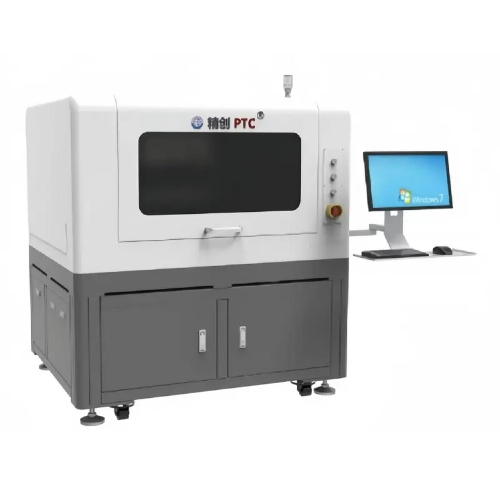
At Suzhou PTC Optical Instrument Co., Ltd., we specialize in providing advanced SAT solutions tailored to meet the specific needs of your industry. Whether you're looking to improve quality control, enhance manufacturing processes, or gain deeper insights into material properties, our SAT systems offer the precision and reliability you need. Feel free to contact us for more information or to discuss how our SAT technology can benefit your operations.
8. FAQ
1. How does SAT detect internal defects?
SAT detects defects by analyzing the interaction of sound waves with the material. Defects, such as cracks or voids, cause differences in acoustic impedance, which result in reflected sound waves. These reflections are captured and used to generate images of the internal structure.
3. What types of materials can be tested using SAT?
SAT is suitable for a wide range of materials, including metals, composites, ceramics, plastics, and semiconductors. Its versatility makes it ideal for industries like aerospace, automotive, and electronics.
4. Can SAT be used for large-scale testing?
Yes, SAT is highly efficient and can be used for both small-scale and large-scale testing. It is especially valuable in high-throughput environments where large numbers of components need to be inspected quickly.
5. What is the cost of implementing SAT in a manufacturing environment?
The cost of implementing SAT depends on the complexity of the system and the specific requirements of customer. However, the investment is often justified by the increased accuracy, speed, and automation level.
 English
 العربية
 Français
 Русский
 Español
 Português
 Deutsch
 italiano
 日本語
日本語 한국어
한국어 Nederlands
 Tiếng Việt
 ไทย
ไทย Polski
 Türkçe
 Bahasa Melayu
 தமிழ்
தமிழ் Filipino
 Bahasa Indonesia
 magyar
 Română
 Čeština
 Српски
 हिन्दी
 فارسی
فارسی Slovenčina
 Slovenščina
 українська
 Suomi
Suomi Հայերեն
 עברית
עברית Latine
 Shqip
Shqip বাংলা
বাংলা Eesti keel
 Oʻzbekcha
 latviešu
 Беларуская мова
 Esperanto


