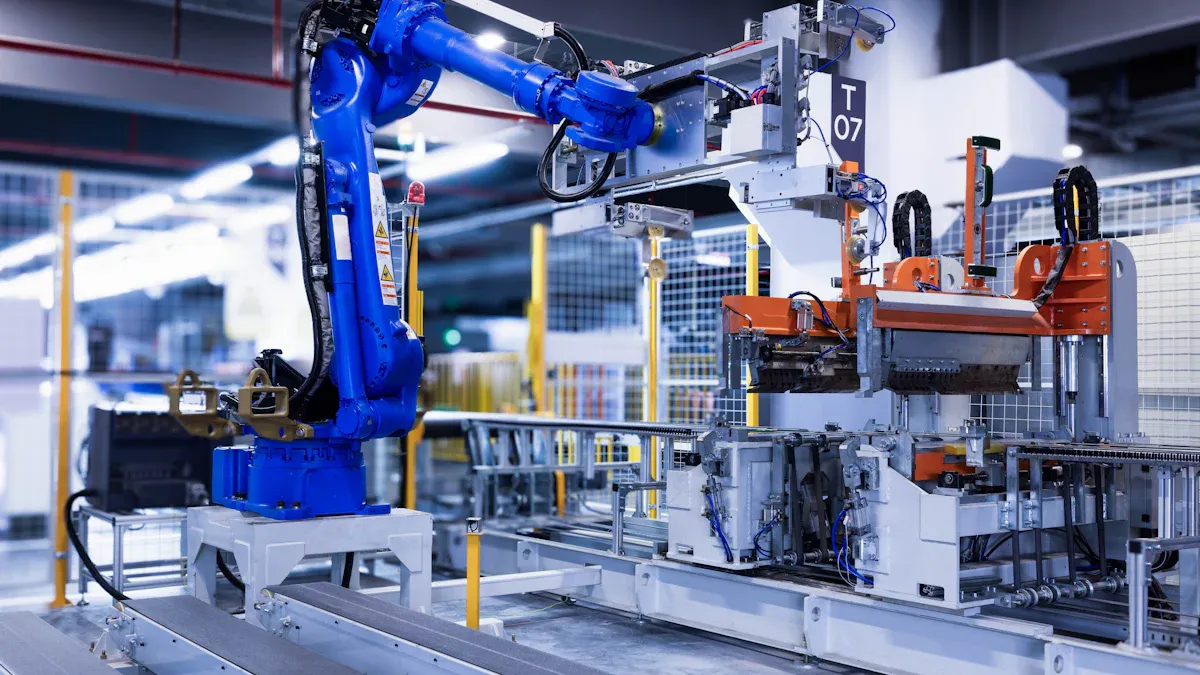
You see AOI systems transforming quality control across many sectors, as various industries use AOI to enhance their processes.
The electronics industry relies on AOI for high-precision defect detection in circuit boards and soldering.
Automotive manufacturers use AOI to spot flaws in components, improving vehicle safety.
Pharmaceutical companies ensure product consistency and FDA compliance with AOI.
| Industry | Primary Reasons for Adoption |
| Electronics Manufacturing | Improved accuracy, higher efficiency, reduced defects, better product quality |
| Automotive Manufacturing | Early defect detection, structural reliability, higher product yield |
| Pharmaceuticals | Compliance, safety, process monitoring |
The AOI system market is growing rapidly, driven by AI and machine learning integration, as more industries use AOI to streamline their operations.
Key Takeaways
AOI technology enhances quality control by detecting defects early in manufacturing processes.
Industries like electronics, automotive, and pharmaceuticals benefit significantly from AOI for improved safety and compliance.
Implementing AOI can reduce defect rates by up to 50%, leading to higher product quality and fewer recalls.
AI integration in AOI systems boosts inspection speed and accuracy, making processes more efficient.
Automated inspections help maintain compliance with strict industry standards, such as FDA and ISO regulations.
AOI systems can be easily integrated into existing production lines, offering flexibility and scalability.
Using AOI technology can lead to significant cost savings by minimizing waste and reducing downtime.
Real-time data from AOI systems supports proactive quality management and continuous improvement.
Industries Use AOI Technology
You see automated optical inspection is becoming a standard across many manufacturing sectors. Industries use AOI to meet rising demands for speed, accuracy, and reliability in quality control. The market for AOI technology continues to grow as more companies seek to improve manufacturing quality control and reduce defects.
Key Sectors Adopting AOI Technology:
Electronics Manufacturing
Electronics manufacturers lead the way in adopting automated optical inspection. You rely on AOI technology to keep up with the trend of miniaturization and the need for high-speed production. The demand for portable devices and high-speed ceramic boards pushes you to use advanced inspection tools. AOI systems help you achieve precise defect detection and maintain strict quality control standards.
Circuit Board Assembly
Circuit board assembly requires high accuracy. You use AOI technology to measure solder paste volume and ensure it stays within the 80% to 120% target range. AOI checks the alignment of solder paste with pads, which prevents misplacement during component assembly. It also detects issues like smearing or insufficient paste that can affect soldering quality. By using AOI, you can reduce defect rates by up to 50% in high-volume electronics production.
Component Placement
Component placement is another critical step in electronics manufacturing. AOI systems verify that each component sits in the correct position and orientation. You can catch missing, misaligned, or wrong components before they cause bigger problems. This level of inspection improves accuracy and reduces warranty claims. The table below shows measurable benefits you gain from AOI in electronics manufacturing:
| Benefit | Measurement |
| Accuracy Improvement | 63% to 97% |
| Defect Detection Accuracy | 99% |
| Defect Size Detection | Smaller than 0.1mm |
| Warranty Claims Reduction | 60-80% |
Automotive Industry
The automotive industry depends on automated optical inspection to ensure safety and reliability. You see AOI systems inspecting both passenger and commercial vehicles, with passenger vehicles dominating due to higher production volumes and advanced electronics. AOI technology helps you meet strict regulatory standards and maintain high product yield.
Parts Inspection
You use AOI to inspect critical automotive parts, such as engine components and braking systems. AOI detects cracks, checks dimensional accuracy, and ensures each part meets safety and performance standards. This process helps you avoid costly recalls and maintain customer trust.
Assembly Line Checks
On the assembly line, AOI systems monitor the placement and quality of components in real time. You benefit from early defect detection, which leads to fewer errors and less downtime. AI-powered AOI can even predict potential failures, optimizing your processes and improving operational efficiency. The table below highlights results from companies using AOI in automotive manufacturing:
| Company | Defect Reduction | Cost Savings | Downtime Reduction |
| BMW | 40% | 15-20% | 28% |
| Automotive Components | 37% | Consistent over 2 years | N/A |
Semiconductor Industry
Semiconductor manufacturing requires the highest level of quality control. You use AOI technology to inspect wafers and microchips, as even the smallest defect can cause system failures or safety hazards. The trend toward miniaturized electronics makes AOI essential for your production lines.
Wafer Inspection
During wafer inspection, AOI systems scan for surface defects, pattern errors, and contamination. You can identify problems early, which helps you improve yield and reduce waste. Companies report true defect detection rates between 97% and 99% after adopting AOI.
Microchip Defects
AOI technology also detects microchip defects that are invisible to the human eye. You benefit from AI-driven analytics, which speed up yield improvement and reduce manufacturing costs by up to 30%. The table below shows key metrics from semiconductor manufacturing with AOI:
| Metric | Value |
| True defect detection rate | 97–99% |
| Die yield (AI vs Conventional) | 98.5% vs ~98.2% |
| Overall fab yield gains | 0.3–1% |
| False positive rate (AI-AOI) | 4–10% |
You see industries use AOI achieves higher standards in manufacturing quality control. Automated optical inspection delivers consistent results, reduces defects, and supports your drive for innovation.
Automated Optical Inspection in Medical and Pharma
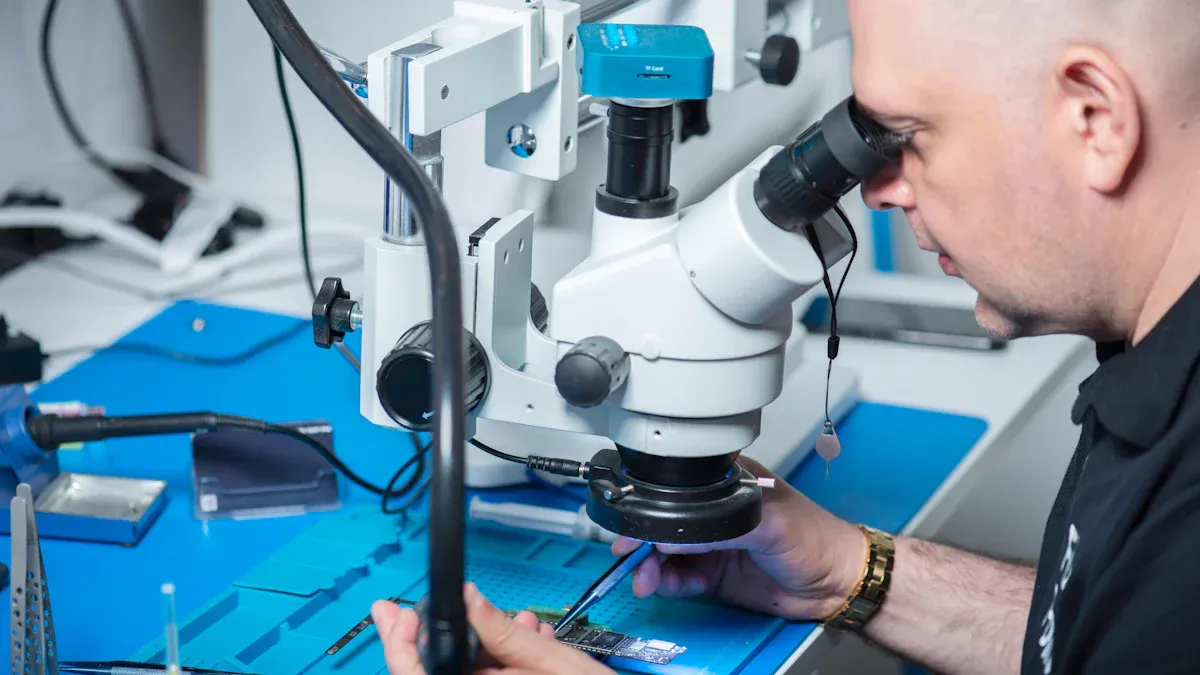
Medical Device Manufacturing
Precision Inspection
You face strict requirements when you manufacture medical devices. Automated optical inspection helps you meet these demands by providing precise and reliable inspections. You can use AOI technology to check for micro-defects that are invisible to the naked eye. Early defect identification prevents costly product recalls and improves patient safety. For example, a report from MIT Technology Review showed that a major Japanese electronics manufacturer used laser-assisted AOI to reduce micro-defect incidence by 28% across 15,000 units each month. This improvement means you can deliver safer products and maintain your reputation for quality.
Early defect identification prevents expensive recalls.
Improved defect detection reduces scrap rates.
Enhanced compliance with regulatory standards.
Compliance Support
You must follow strict regulations, such as FDA and ISO 13485 standards, in medical device manufacturing. Automated optical inspection systems help you meet these requirements by ensuring every inspection is thorough and consistent. AOI technology supports audit-readiness and reduces risk. You also benefit from digital inspection logs, which make it easier to document compliance and improve quality assurance over time.
| Evidence Type | Description |
| Regulatory Compliance & Patient Safety | AOI systems ensure inspections meet stringent FDA and ISO 13485 standards, reducing risk and supporting audit-readiness. |
| Operational Efficiency & Cost Savings | AOI reduces inspection time and labor costs while minimizing product recalls and rework. |
| Enhanced Traceability & Reporting | AI-powered systems generate digital inspection logs, supporting compliance documentation and continuous quality improvement. |
Pharmaceutical Industry
Packaging Inspection
You need to guarantee that every package meets high standards for safety and accuracy. Automated optical inspection checks the print quality of labels and packaging, rejecting any with missing or incorrect codes. AOI technology captures high-speed digital images for immediate analysis. You can compare these images to pre-set templates, which ensures every package matches your quality requirements. The modular design of AOI systems allows you to fit them into different production lines, making your operations more efficient.
| Feature | Description |
| Print Quality Verification | Ensures labels and packaged products have correct print quality, rejecting missing or incorrect codes. |
| Real-Time Imaging | Captures high-speed digital images of product labels for immediate analysis. |
| Automatic Quality Inspection | Continuously compares current label images to pre-set templates for quality assurance. |
| Modular Design | Can fit various line structures and integrate with other equipment for streamlined operations. |
| Clean Room Compliance | Options for stainless steel production and I.P. sealing for easy maintenance in clean environments. |
Automatically verifies label presence and placement.
Measures package size and reads barcodes.
Checks for completeness of packaged contents.
Generates reports and signals based on inspection results.
Label Verification
You must ensure that every label is present, placed correctly, and readable. Automated optical inspection systems verify label placement on bottles and other containers without human supervision. These systems adapt to different inspection stages, making them suitable for a wide range of pharmaceutical products. Automated vision assessment technologies help you meet strict industry standards, such as GXP and FDA regulations. They also ensure compliance with Standard Operating Procedures (SOPs) and EU-GMP Annex 1, which require 100% inspection of filled containers.
| Regulatory Standard | Description |
| EU-GMP Annex 1 (8.30) | Requires individual visual inspection of every filled container (100% inspection). |
| EU-GMP Annex 1 (8.32) | Allows automated methods, provided they are validated and shown to be equivalent or superior to manual inspection. |
Tip: By using automated optical inspection, you can improve operational efficiency and maintain compliance with the highest industry standards.
AOI Systems in Packaging and Food
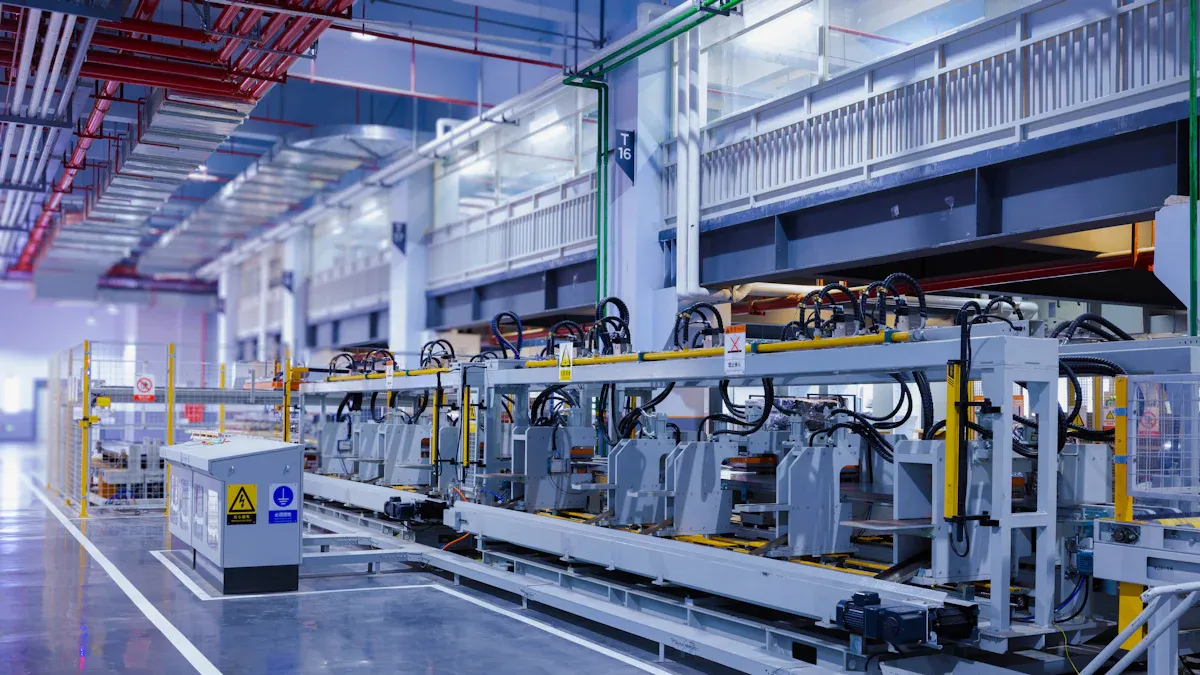
Packaging Industry
Visual Defects
You face many challenges when you inspect packaging for visual defects. Automated optical inspection helps you spot issues like scratches, dents, and misprints that can affect product appearance and safety. You can rely on these systems to check every package quickly and accurately. With automated optical inspection, you achieve high precision in your inspections. For example, you can reach a mean Average Precision (mAP) of 97.4% and an inference speed of 79.25 frames per second. When you inspect saline bottles, you can even reach an mAP50 of 99.3%.
| Metric | Result |
| mAP (mean Average Precision) | 97.4% |
| Inference Speed | 79.25 FPS |
| mAP50 for saline bottle | 99.3% |
You also benefit from improved dimensional accuracy of ±0.2 mm and stress resolution of ±3 nm. Automated optical inspection reduces the time delay for production line inspection by about 50%. This means you can deliver products faster and with fewer errors.
Barcode Accuracy
You need to make sure every barcode on your packaging is clear and readable. Automated optical inspection checks barcode quality and placement at high speed. You can catch missing or damaged barcodes before products leave your facility. This process helps you avoid shipping errors and supports traceability. You also improve compliance with industry standards. Automated optical inspection systems help you maintain a high level of accuracy and efficiency in your packaging lines.
Food and Beverage
Product Surface Inspection
You must ensure that every food and beverage product meets strict safety and quality standards. AOI technology automates the inspection process and focuses on critical areas such as seal integrity, fill level control, and label verification. You can detect contamination, gaps, wrinkles, and weak spots in packaging that could compromise safety. You also check for tears, incomplete closures, and tamper-evident features.
Seal integrity checks keep packaging airtight and safe.
Fill level control prevents overfills and underfills.
Label verification ensures accurate product information.
Contamination detection maintains product safety and hygiene.
Machine vision systems inspect every product at full production speed. You can find defects that human inspectors might miss. These systems generate real-time data, which helps you improve your processes and create a feedback loop for proactive quality management.
Packaging Quality
You want to reduce contamination and recall rates in your food and beverage production. Automated optical inspection helps you reach this goal. After you implement these systems, you can see a 30% reduction in contamination and a 60% reduction in recalls. This leads to enhanced consumer safety and better brand reputation.
| Outcome | Metric |
| Reduction in contamination | 30% |
| Reduction in recalls | 60% |
Tip: By using automated optical inspection, you can improve both product safety and operational efficiency in your packaging and food production lines.
AOI Technology in Aerospace and Defense
Aerospace Industry
Critical Component Checks
You work in an industry where safety and reliability matter most. In aerospace, you use automated optical inspection to check critical components like turbine blades, landing gear, and avionics. These parts must meet strict standards because even a small flaw can lead to serious problems. Automated optical inspection systems scan for cracks, surface defects, and dimensional errors. You can spot issues early and prevent failures before they happen.
In aerospace and defense, quality is paramount. Systems must adhere to the highest safety and reliability standards. Failures can result in catastrophic outcomes, including loss of life and mission failures.
You see that 3D AOI systems have made a big difference in aerospace manufacturing. They reduce defect rates from 2% to 0.5%. This improvement means you can trust your aircraft components to perform under extreme conditions.
Assembly Verification
You also use automated optical inspection to verify assembly processes. AOI systems check that every bolt, wire, and connector is in the right place. You can catch missing or misaligned parts before the aircraft leaves the factory. This step helps you avoid costly repairs and delays. AOI technology supports quality assurance for satellite and spacecraft parts, which must work perfectly in space.
| Application | Description |
| Inspection of critical aircraft components | Ensures reliability and safety in aviation. |
| Quality assurance of satellite and spacecraft parts | Maintains operational integrity in space missions. |
Defense Sector
Safety Standards
You know that defense systems must meet the highest safety standards. Automated optical inspection helps you confirm that military-grade electronics and equipment work as designed. You use AOI to inspect circuit boards, sensors, and communication devices. This process ensures that every part meets strict military requirements.
You rely on AOI to prevent failures in mission-critical systems.
AOI systems help you maintain compliance with defense regulations.
You can document every inspection for traceability and audits.
Performance Assurance
You want to make sure that every defense product performs as expected. Automated optical inspection gives you confidence by detecting hidden defects that manual checks might miss. Advanced AOI systems, including those with AI and 3D imaging, enhance your ability to find problems early. For example, you can use 2D AOI for general manufacturing, but 3D AOI provides a significant boost in reliability for aerospace and defense.
| AOI System Type | Impact on Reliability | Example Use Case |
| 2D AOI | Moderate defect detection | General manufacturing |
| 3D AOI | Significant reduction in defect rates | Automotive and aerospace sectors |
| Advanced AOI (2D & 3D) | Enhanced detection of hidden defects | Consumer electronics manufacturing |
You see that automated optical inspection supports both safety and performance in the defense sector. By using these systems, you reduce the risk of mission failure and protect lives.
Tip: If you want to learn more about AOI solutions for aerospace and defense, you can explore resources from trusted providers like PTC.
Automated Optical Inspection Systems in Telecom and Energy
Telecommunication Industry
Optical Component Inspection
You work in an industry where speed and accuracy matter. Automated optical inspection systems help you check the quality of optical components and circuit boards in your telecommunication equipment. These systems give you the power to:
Ensure that every circuit board works as designed, which boosts customer satisfaction and your business reputation.
Inspect complex board layouts with high accuracy. This is important for optical components that must meet strict standards.
Detect flaws early in the process. Early detection means you spend less time and money on rework, and you keep your production lines running smoothly.
Automated optical inspection systems let you find tiny defects that human eyes might miss. You can trust these systems to keep your products reliable and your customers happy.
System Reliability
You want your telecommunication networks to run without interruption. Automated optical inspection systems help you reach this goal by reducing downtime and improving performance. Many companies in the telecom industry have used these systems to cut operational costs and keep their networks up and running.
For example, Verizon Business uses advanced digital tools to improve system reliability. Automated optical inspection systems play a key role in this process. You can use these systems to monitor equipment health, spot problems before they cause failures, and keep your network strong.
Tip: Automated optical inspection systems support your digital transformation and help you deliver better service to your customers.
Energy and Power Sector
Component Quality
You need to make sure every part in your energy and power systems meets high standards. Automated optical inspection systems help you check the quality of components like circuit breakers, transformers, and connectors. These systems scan for cracks, surface flaws, and incorrect assembly. You can catch problems before they lead to bigger issues.
Automated optical inspection gives you fast and accurate results. You can inspect thousands of parts each day and keep your production lines moving. This technology helps you lower the risk of equipment failure and improve the safety of your energy systems.
System Safety
You care about safety in your power plants and energy grids. Automated optical inspection systems help you spot defects that could cause accidents or outages. You can use these systems to check wiring, insulation, and other critical parts. If you find a problem, you can fix it before it affects your operations.
Automated optical inspection supports your efforts to meet industry safety standards. You can keep detailed records of every inspection, which helps you during audits and when you need to prove compliance.
| Application Area | Benefit Provided |
| Optical Components | High-precision defect detection |
| System Monitoring | Reduced downtime and failures |
| Power Equipment | Improved safety and reliability |
AOI Industry Comparison Summary
Quick-Reference Table
You can use this table to compare how AOI systems work at different stages and across major industries. Each stage brings unique benefits that help you improve quality and efficiency.
| Application Stage | Main Benefit | Typical Industry Examples |
| Bare Board Inspection | Finds surface defects like scratches and shorts. Builds a solid foundation for assembly. | Electronics, Semiconductors |
| Solder Paste Inspection (SPI) | Checks for even solder paste application. Targets 100% coverage to prevent future issues. | Electronics, Automotive |
| Pre-Reflow Inspection | Ensures accurate component placement. Tolerances often below 0.1mm for high-precision boards. | Electronics, Medical Devices |
| Post-Reflow Inspection | Checks solder joint quality and missing components. Crucial for product functionality. | Electronics, Automotive, Telecom |
You see that AOI adoption rates continue to rise in sectors like consumer electronics, telecommunications, automotive, and medical devices. The main drivers include the need for smart devices, wireless communication, industrial IoT, and digitization in healthcare.
Key Benefits by Sector
You gain different advantages from AOI technology depending on your industry. Here are the main benefits you can expect:
| Sector | Main Advantages |
| Consumer Electronics | Supports smart device production and miniaturization. |
| Telecommunications | Enables reliable, high-speed communication equipment. |
| Automotive | Improves safety and supports industrial IoT adoption. |
| Medical Devices | Ensures precision and supports digital transformation. |
| Semiconductors | Delivers high accuracy for microchip and wafer checks. |
| Food & Packaging | Reduces contamination and improves traceability. |
| Energy & Power | Increases safety and reliability of critical systems. |
| Aerospace & Defense | Meets strict safety and performance standards. |
Key AOI Benefits Across All Sectors:
You achieve over 99% accuracy in defect detection for electronics and semiconductors.
You boost inspection speed by up to 50% with AI-powered systems.
You maintain consistent production flow by removing defective products immediately.
You reduce downtime and costly interruptions.
You provide reliable, high-speed inspection that manual methods cannot match.
You lower waste and improve overall product quality.
You can see that AOI technology transforms quality control in every industry. If you want to learn more about AOI solutions, you can explore trusted providers like PTC at https://www.ptc-stress.com/.
You see how industries use AOI to transform quality control in electronics, automotive, medical, and more. AOI systems help you reduce defects and deliver better products. As industries use aoi to meet higher quality control standards, you benefit from faster inspections and smarter manufacturing.
| Market Growth Forecast | AOI adoption will rise as manufacturers demand better quality control and process optimization. |
For trusted AOI solutions, explore PTC at https://www.ptc-stress.com/.
FAQ
What is AOI and how does it work?
AOI stands for Automated Optical Inspection. You use cameras and software to scan products for defects. The system compares images to set standards. If it finds a flaw, it alerts you right away.
Which industries benefit most from AOI?
You see AOI used in electronics, automotive, medical devices, food, packaging, and energy. Each industry uses AOI to improve quality, reduce defects, and meet safety standards.
Can AOI systems replace human inspectors?
You can use AOI to handle repetitive and detailed inspections. AOI works faster and finds tiny defects that people might miss. However, you still need skilled workers for final checks and decision-making.
How does AOI improve product quality?
AOI helps you catch defects early. You remove faulty products before they reach customers. This process leads to higher quality, fewer recalls, and better customer trust.
Is AOI easy to add to existing production lines?
You can integrate AOI systems into most production lines. Many AOI solutions offer modular designs. You can choose the features that fit your needs.
What types of defects can AOI detect?
AOI detects:
Scratches
Misalignments
Missing parts
Soldering issues
Incorrect labels
How does AOI support industry compliance?
You use AOI to keep digital records of inspections. These records help you prove compliance with standards like FDA, ISO, and GXP. AOI also supports audit-readiness.
Where can I find reliable AOI solutions?
You can explore AOI systems from PTC. Visit https://www.ptc-stress.com/ for more information and product options.
 English
 العربية
 Français
 Русский
 Español
 Português
 Deutsch
 italiano
 日本語
日本語 한국어
한국어 Nederlands
 Tiếng Việt
 ไทย
ไทย Polski
 Türkçe
 Bahasa Melayu
 தமிழ்
தமிழ் Filipino
 Bahasa Indonesia
 magyar
 Română
 Čeština
 Српски
 हिन्दी
 فارسی
فارسی Slovenčina
 Slovenščina
 українська
 Suomi
Suomi Հայերեն
 עברית
עברית Latine
 Shqip
Shqip বাংলা
বাংলা Eesti keel
 Oʻzbekcha
 latviešu
 Беларуская мова
 Esperanto


