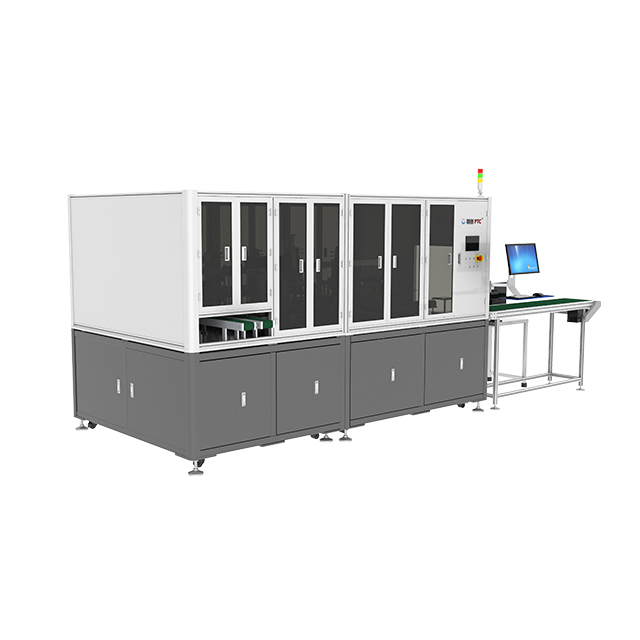
High yield loss when separating brittle materials like Alumina (Al2O3) or Aluminum Nitride (AlN) drastically reduces profit margins. Manufacturers often face this severe scrap issue late in the production cycle. You cannot process these rigid, high-density components using standard FR4 depaneling techniques. Legacy printed circuit board (PCB) routing introduces extreme mechanical stress. Such outdated methods cause rampant micro-cracking and destructive edge chipping across sensitive ceramic panels.
To solve this critical manufacturing bottleneck, modern facilities rely on highly specialized solutions. We will define the exact function of a dedicated substrate separator. We will also outline the evaluation criteria necessary to select reliable tools. You will understand how to implement these sophisticated systems seamlessly into high-volume manufacturing lines. Protecting your delicate circuitry requires absolute precision. The right mechanical equipment guarantees clean separations and maximizes your overall production yield.
Key Takeaways
The primary function of a ceramic substrate breaking machine is to separate pre-scored ceramic panels into individual units with zero mechanical stress applied to the sensitive internal circuitry.
Evaluating a ceramic substrate singulation machine requires analyzing edge quality tolerances, throughput (UPH), and tool wear costs.
Transitioning from manual or legacy depaneling to automated singulation equipment reduces scrap rates but requires strict alignment calibration and operator training.
Vendor selection should prioritize verifiable sample testing and local technical support over initial capital expenditure.
The Core Function: Why Standard Depaneling Fails for Ceramics
The Material Challenge
Direct Bonded Copper (DBC) and Active Metal Brazing (AMB) substrates offer incredible thermal performance. Industries utilize them heavily in automotive EV inverters, RF communication modules, and high-power LED arrays. However, they possess a highly brittle and rigid nature. The high-temperature bonding processes create extremely hard structures. Standard routers and diamond saws generate immense friction and vibration. They easily shatter these fragile panels because they treat the ceramic like typical fiberglass.
Mechanism of Action
A specialized Ceramic Substrate Breaking Machine operates on an entirely different mechanical principle. It applies controlled, localized pressure precisely along pre-laser-scribed V-grooves. Most industrial designs utilize a specialized guillotine mechanism or a precision roller system. The blade never actually cuts through the solid material. Instead, it snaps the ceramic cleanly along the weakened scribe line. The tooling relies on a wedge shape designed to perfectly match the V-groove angle. This exact geometric matching forces the substrate to fracture along its natural cleavage plane.
Stress Isolation
This localized mechanism isolates mechanical stress away from the active die and mounted components. It actively prevents the propagation of micro-cracks throughout the crystalline substrate lattice. Standard rotating bits pull, tear, and grind at the material edges, sending shockwaves through the entire board. Dedicated separation equipment simply leverages the existing laser-scored fault lines. You achieve perfectly clean singulation without compromising internal circuitry. This method protects the hermetic seals of delicate semiconductor packages mounted nearby.
Evaluation Dimensions: Sizing Up Singulation Equipment
Precision and Edge Quality
Evaluating the right Singulation Equipment requires a strict look at several operational dimensions. Precision dictates the ultimate success of your packaging process. You must deeply assess the machine’s tolerance for alignment accuracy. Top-tier systems utilize advanced CCD cameras and fiducial recognition to maintain tolerances around ±0.05mm. You should evaluate how the breaking mechanism directly impacts edge roughness. High alignment accuracy directly minimizes chip-out rates along the separation line. Less chipping means fewer short circuits in high-voltage applications.
Throughput vs. Yield (The Production Equation)
Production engineering teams must constantly balance throughput against yield. Fast cycle times mean absolutely nothing if your defect rates spike. Compare manual loading systems against automatic robotic feeding. Cassette-to-cassette automation significantly boosts Units Per Hour (UPH). It also heavily reduces human handling errors. Automated systems gently pick and place the fragile ceramic sheets. Manual handling often causes accidental corner drops and pre-mature substrate shattering before the panel even reaches the machine.
Tooling Lifecycle and Consumables
Tooling lifecycle directly impacts your production uptime. Calculate the expected lifespan of your specialized breaking blades and localized impact tools. Ceramic is one of the most abrasive materials in electronics manufacturing. Frequent blade replacement causes frustrating manufacturing downtime. Tungsten carbide blades offer better longevity than standard hardened steel. You must account for the time required to swap these blades. Machine recalibration after a blade change also consumes valuable production hours.
Evaluation Metrics Summary
Evaluation Dimension
Standard Requirement
Advanced Requirement (High-Volume)
Impact on Production
Alignment Accuracy
±0.10mm
±0.05mm or better
Prevents V-groove misses and micro-cracking.
Material Handling
Manual load/unload
Cassette-to-cassette robotics
Reduces human error and boosts UPH.
Vision System
Basic optical sensors
High-res CCD with fiducial tracking
Ensures precise blade-to-score registration.
Blade Lifespan
50,000 cuts
150,000+ cuts (Tungsten Carbide)
Minimizes downtime for consumable swaps.
Comparing Solution Categories: Mechanical vs. Alternative Methods
Mechanical Breaking Machines (Guillotine/Blade)
Pros: They offer incredibly high throughput and feature a much lower upfront cost. They remain highly effective for any pre-scored substrates. The operation requires less complex software programming. Maintenance routines are highly predictable.
Cons: The physical tooling requires frequent blade maintenance. The process is strictly limited to straight-line X/Y cuts. You cannot process circular or complex geometric shapes.
Pros: This alternative method features zero physical contact with the board. It allows for arbitrary shape cutting and complex contours. It eliminates the need for physical consumable blades entirely.
Cons: Lasers inevitably introduce a Heat Affected Zone (HAZ). This thermal impact can alter the electrical properties of the ceramic edge. They carry significantly higher capital costs. The burning process often creates unwanted slag or debris. You must aggressively clean the panels post-cut.
Decision Framework
You should deploy mechanical breaking solutions for high-volume, standard rectangular grids. This is especially true where laser pre-scoring has already been applied earlier in the fab. Lasers work best for low-volume prototypes or highly complex geometries. However, simple straight-line singulation heavily favors mechanical separation. The pure speed of a breaking machine outperforms lasers in standard square die production. Using physical blades eliminates thermal risks near sensitive junctions.
Implementation Realities and Adoption Risks
Calibration and Alignment
Adopting new manufacturing technology introduces specific operational risks. Calibration and alignment demand constant vigilance from your engineering team. You must address the inherent risk of machine drift. A mechanical misalignment of just a fraction of a millimeter can shatter an entire batch of expensive sensors. Operators must perform routine calibration checks. They must verify the alignment of the top blade against the bottom anvil. Advanced machines feature self-calibrating routines, but manual verification remains a critical best practice.
Environmental Controls
Environmental controls play a massive role in equipment longevity. Ceramic dust is extraordinarily abrasive. It proves highly detrimental to cleanroom standards and internal machine bearings. You must integrate robust dust extraction systems directly into the cutting zone. High-efficiency particulate air (HEPA) vacuums should sit adjacent to the fracture point. If dust settles on the machine's pneumatic valves, they will eventually jam. Proper extraction protects both your facility's air quality and the machine's moving parts.
Operator Training Requirements
Your production team needs proper operator training to succeed. Setting up optimal breaking profiles involves a steep initial learning curve. Operators must balance downward pressure, travel speed, and gap distance. They must dynamically adjust these precise parameters for different substrate thicknesses and material densities. Thicker Alumina boards require a different pressure curve than thin AlN boards. We recommend creating locked, password-protected recipes within the machine software. This prevents unapproved operators from altering critical separation physics on the floor.
Shortlisting Logic and Procurement Next Steps
Proof of Concept (PoC)
Selecting the best vendor requires objective, verifiable evidence. Never purchase a ceramic substrate singulation machine blindly off a specification sheet. You must provide your own pre-scored substrate samples for comprehensive vendor testing. Generic demo materials will not replicate your exact production challenges. Send a batch of at least fifty panels. This volume allows the vendor to demonstrate continuous throughput stability. It also proves the machine can handle your specific V-groove depths and panel warpage tolerances.
Reviewing the Data
Once you receive the separated samples back, begin rigorous inspection. Inspect all vendor-returned samples under Scanning Electron Microscopes (SEM). High-magnification optical inspection is equally effective. You must verify the absolute absence of micro-cracks spreading from the separation line. Check the substrate edges for unacceptable stress fractures or severe chip-outs. Measure the physical dimensions of the separated units to ensure the machine maintained strict X/Y dimensional stability across the entire batch.
Vendor Evaluation Best Practices
Look closely at the machine footprint and facility requirements. Verify you have the correct pneumatic air pressure and clean power drops available. Secure guaranteed Service Level Agreements (SLAs) for critical spare parts. Ascertain local technical support availability in your specific region. Ensure the vendor offers comprehensive on-site training for your process engineering team. Strong local support often dictates the long-term success of the installation more than the machine's base hardware alone.
Conclusion
The fundamental function of a mechanical separator is protecting your manufacturing ROI. It achieves this by maximizing yield during the final, most vulnerable stage of semiconductor packaging. Standard routers simply destroy brittle materials. Using the correct localized pressure technique ensures absolute structural integrity. A dedicated system cleanly snaps V-grooved panels without transferring shock to internal copper layers.
We encourage buyers to immediately compile their exact substrate specifications. Document your specific material type, total panel thickness, and laser scribe depth. Gather this critical data and request customized benchmark testing from your shortlisted vendors today. Insist on rigorous PoC testing to validate edge quality. Proper preparation ensures you integrate a singulation solution capable of scaling with your highest production demands.
FAQ
Q: Can a standard PCB depaneling router be used as a ceramic substrate singulation machine?
A: No. Routers cause excessive vibration and mechanical stress, leading to shattered ceramics and severe tool wear. Standard router bits quickly dull against hard materials like Alumina, causing them to tear rather than cut the substrate.
Q: How deep must a ceramic substrate be pre-scribed before using a breaking machine?
A: Typically, the scribe depth should be 30% to 50% of the total substrate thickness, though this varies based on material density and vendor specifications. Shallower scores require higher breaking pressure, increasing the risk of uncontrolled fractures.
Q: What maintenance is required for a mechanical breaking machine?
A: Regular cleaning of ceramic dust from sensors/guides, periodic blade sharpness inspection, and pneumatic pressure calibration. You should also routinely check the vacuum extraction filters to ensure abrasive dust does not recirculate into the mechanics.
 English
 العربية
 Français
 Русский
 Español
 Português
 Deutsch
 italiano
 日本語
日本語 한국어
한국어 Nederlands
 Tiếng Việt
 ไทย
ไทย Polski
 Türkçe
 Bahasa Melayu
 தமிழ்
தமிழ் Filipino
 Bahasa Indonesia
 magyar
 Română
 Čeština
 Српски
 हिन्दी
 فارسی
فارسی Slovenčina
 Slovenščina
 українська
 Suomi
Suomi Հայերեն
 עברית
עברית Latine
 Shqip
Shqip বাংলা
বাংলা Eesti keel
 Oʻzbekcha
 latviešu
 Беларуская мова
 Esperanto