Please Choose Your Language


Manufacturing defects carry a heavy compounding cost. Even minor deviations in dimension, thickness, or warpage routinely trigger disastrous downstream assembly failures. This leads to excessive scrap rates, rework bottlenecks, and severely compromised product reliability in the field. A mere ten-micron distortion can prevent critical surfaces from mating, destroying an entire production run.
Historically, quality teams relied heavily on legacy, isolated measurement methods. Technicians used basic hand tools like calipers, micrometers, or separate coordinate measuring machines (CMMs) to inspect products. Today, modern manufacturers leverage integrated optical and 3D metrology systems. They capture highly accurate, holistic surface data instantly.
This article provides engineering and QA leaders with a clear, objective evaluation framework. We will explore how implementing combined measurement systems protects production yield and ensures strict compliance. You will learn how to move beyond isolated tools, assess core technologies, and safely implement automated routines on the factory floor.
Integrated dimension thickness warpage inspection equipment reduces First Article Inspection (FAI) bottlenecks and standardizes quality control.
Primary use cases span tight-tolerance industries, including advanced packaging wafers, plastic injection molding, and complex ceramic substrate measurement.
Evaluating these systems requires looking beyond top-line spec sheets to assess inline integration capabilities, environmental stability, and software compliance.
Successful deployment hinges on managing implementation risks, specifically around calibration drift, vibration isolation, and operator adoption.
Treating dimensional, thickness, and warpage checks as siloed QA processes severely extends inspection cycle times. Moving ceramic substrates manually between a micrometer station, an optical comparator, and a flatbed scanner introduces substantial human error. Fragile components face physical damage during transfer. Furthermore, subjective operator handling drastically alters measurement results, especially on flexible materials.
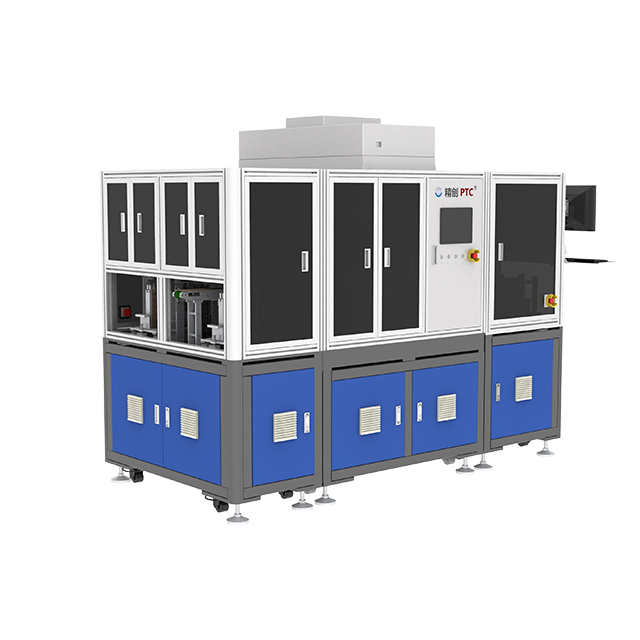
Integrated inspection equipment solves this specific business problem. It consolidates multiple physical measurements into a single automated routine. Rather than measuring a ceramic substrate five different times, operators place the substrate into one machine. The system simultaneously captures X, Y, and Z axes, alongside overall profile, flatness, and thickness data. This approach generates a comprehensive digital twin of the physical part within seconds.
To establish metrology authority, we must distinguish between standard flatness and actual warpage. These terms often confuse users, yet they require distinct mathematical evaluations.
Characteristic | Flatness | Warpage |
|---|---|---|
Definition | A geometric tolerance defining how closely a surface mirrors a perfectly flat 2D plane. | A global distortion or deformation across the entire 3D shape of the part. |
Root Cause | Typically machining errors, poor grinding, or rough surface finish. | Internal thermal stress, uneven cooling, or mechanical stress over time. |
Measurement Profile | Evaluates the highest and lowest points on a single defined face. | Evaluates bow, twist, and complex curvature across the entire component geometry. |
Warpage inherently implies physical deformation occurring under thermal or mechanical stress. Detecting it requires a full 3D topographical map, whereas standard flatness might only require localized surface probing. Integrated equipment mathematically extracts both values from the same high-resolution scan.
Different manufacturing sectors face unique challenges regarding part geometry and material stability. Integrated metrology targets tight-tolerance industries where dimensional drift directly causes assembly failures.
Modern semiconductor manufacturing relies on ultra-precise advanced packaging (like 2.5D and 3D ICs). In these environments, microscopic substrate distortion proves fatal. Die attachment and solder bumping processes require perfectly flat wafer surfaces. Even single-digit micron warpage causes critical bonding failures, creating internal voids or short circuits. Automated metrology systems map the entire wafer surface instantly, intercepting deformed substrates before costly micro-components are attached.
High-power electronic modules frequently utilize direct bonded copper (DBC) or active metal brazed (AMB) ceramics. Accurate ceramic substrate measurement remains absolutely vital here. Verifying overall thickness and detecting any bowing prevents catastrophic field failures. High-power transistors require perfectly flush contact against heatsinks to dissipate thermal loads. If a ceramic substrate exhibits warpage, tiny air gaps form. These air gaps trap heat, eventually destroying the electronic module through thermal runaway.
You cannot manage what you do not measure. Implementing these advanced systems requires establishing clear ROI metrics based on production stabilization. Success typically manifests across three distinct metrics:
Reduction in FAI Approval Times: Digitizing measurements cuts typical FAI delays from days down to hours.
Lowered Scrap Rates: Catching thermal deformation trends early allows operators to adjust mold temperatures or oven profiles proactively.
Reduced False Reject Rates: Removing human subjectivity from the measurement process stops perfectly good parts from entering the scrap bin.
Understanding the underlying physics of measurement sensors helps buyers match equipment to specific material properties. Relying on the wrong sensor technology guarantees unreliable data.
The spectral confocal sensor is a non-contact optical displacement measurement system based on the principles of spectral dispersion and confocal optics.
A broadband white light source is emitted through a lens, which disperses the different wavelengths (colors) of light and focuses them at different positions along the optical axis, forming a "rainbow-like" distribution. Only the wavelength that is precisely focused on the surface of the target object is reflected back through a confocal aperture and detected by a spectrometer. By analyzing the specific wavelength of the reflected light, the sensor can precisely calculate the distance from the sensor to the object's surface
Sensor Calibration: Before starting the measurement, calibrate the spectral confocal sensor according to the manufacturer's instructions to ensure measurement accuracy.
Define the 9-Point Pattern: The sample's surface is divided into a grid pattern. The warpage is calculated based on the height of the central region of the sample, with samples taken from 9 regions evenly distributed across the surface. A typical layout consists of:
1 center point: Located in the middle of the ceramic substrate.
8 edge points: Evenly distributed along the perimeter or in a 3x3 grid pattern covering the entire surface.
Data Acquisition: Position the ceramic substrate on the motion stage. The spectral confocal sensor is moved to each of the 9 predefined points. At each point, the sensor emits light and records the precise height (Z-axis value) of the surface.
Data Recording: Record the height measurements for all 9 points. For a more comprehensive analysis, the sensor can also perform a raster scan of the entire surface to generate a 3D point cloud.
When engineering teams need sub-micron accuracy, they turn to confocal chromatic sensors and white-light interferometry. These technologies excel at precise thickness inspection. Confocal sensors split white light into a continuous spectrum. They calculate distance based on which exact color wavelength focuses perfectly on the target surface. This allows systems to measure the thickness of clear layers or coatings from one side, entirely eliminating destructive cross-sectioning.
Procuring advanced metrology tools demands strict criteria. Top-line spec sheets often highlight theoretical performance in perfect laboratory conditions. Factory floors are far less forgiving.
Engineers must guide their procurement teams through the core throughput versus accuracy trade-off. Inline inspection systems prioritize speed. They perform 100% inspection directly on the conveyor belt, capturing macroscopic defects. However, they sacrifice ultra-high resolution to keep up with production cycle times. Conversely, offline metrology lab systems prioritize absolute precision over speed. They inspect smaller sample batches using maximum resolution. You must evaluate whether your process demands 100% inline sorting or high-fidelity offline sample monitoring.
Do not trust theoretical spec sheets blindly. An instrument's claimed resolution rarely matches its performance on complex industrial geometries. Evaluating Gauge R&R data remains the most critical purchasing step. You must run GR&R studies using your actual production parts. The study must prove the equipment consistently returns the same measurement when assessing the identical part multiple times (repeatability). It must also return the identical measurement regardless of which operator loads the routine (reproducibility). A system failing a real-world GR&R study provides no value, regardless of its underlying technology.
The hardware only represents half the solution. The accompanying software drives actual usability. Verifiable data trails are non-negotiable for automotive suppliers. Robust dimension inspection equipment must feature automated reporting tools. These tools ensure continuous ISO and IATF compliance. Furthermore, evaluate the software’s connectivity. Data trapped locally on an inspection PC serves little strategic purpose. Ensure the system integrates seamlessly with your existing Manufacturing Execution Systems (MES) or Quality Management Systems (QMS) using modern industrial protocols.
Installing sophisticated metrology systems onto an active production floor introduces distinct environmental and cultural challenges. Preparation mitigates failure.
Factory floors are hostile environments for optics. High-precision measurement requires strict environmental control. Even minor vibrations from nearby stamping presses blur optical scans, ruining sub-micron measurements. Rapid temperature fluctuations cause both the part and the machine frame to expand or contract dynamically. Airborne dust coats lenses, scattering lasers. You must utilize active vibration isolation tables. Maintain climate-controlled enclosures around the inspection station. These precautions stabilize the environment and guarantee reliable scans.
Metrology systems naturally drift over time due to sensor aging and thermal cycling. Emphasize rigorous, scheduled calibration routines. Operators must periodically verify the system using traceable master artifacts. Artifacts made of thermally stable materials, like Invar, ensure the machine remains anchored to an absolute truth. Skipping calibration schedules rapidly degrades data trustworthiness, rendering the entire inspection investment useless.
The highest risk to ongoing success is "operator dependency." If equipment requires a PhD in metrology to operate, factory technicians will simply bypass it. Address this skill gap directly during procurement. Prioritize systems featuring highly intuitive, recipe-driven software interfaces.
Best Practice: Set up the machine so the operator simply places the ceramic substrate in a standard fixture, scans a barcode, and presses "Start."
Common Mistake: Allowing line operators open access to tweak lighting thresholds or alter measurement datums. Lock these parameters behind engineering-level passwords.
Automating the execution phase minimizes user-to-user variation. It guarantees the machine inspects the final shift's parts exactly like the first shift's parts.
Investing in integrated Dimension, Thickness, and Warpage Measurement serves as a strategic maneuver to stabilize highly complex manufacturing processes. By moving away from subjective hand tools, engineering teams eliminate FAI bottlenecks and secure downstream assembly reliability. Modern 3D optical and confocal technologies map geometries comprehensively, catching thermal distortion before it causes catastrophic field failures.
When establishing your shortlisting logic, adopt a "prove it" methodology. Select your absolute worst-case sample parts—the most warped ceramic substrates you produce. Send these specific samples to equipment vendors and demand a rigorous Proof of Concept (PoC) GR&R study. Only engage vendors who demonstrate verifiable repeatability on your exact geometries.
Do not let scrap rates dictate your production margins. Request a technical consultation with metrology experts to map your inline or offline architecture. Download specialized buyer checklists, review rigorous system specifications, and start modernizing your quality control infrastructure today.
A: Flatness acts as a specific 2D geometric tolerance. It evaluates how closely the highest and lowest points of a single surface mirror a perfect plane. Warpage measures global distortion across the entire 3D shape of a product. It detects twisting, bowing, and complex deformation caused by internal thermal or mechanical stress, requiring a full topographical profile.
A: Automated inspection fundamentally digitizes the approval process. It entirely removes subjective manual handling, such as technicians accidentally crushing soft parts with calipers. The equipment maps the entire part geometry in seconds, providing objective, repeatable data. This drastically speeds up engineering sign-off, moving the factory into full production much faster.